# Bread

Bread changes the structure of the meal as much as the meat does. It determines whether the sandwich opens as a pocket, folds like a wedge, or rolls as a dürüm.

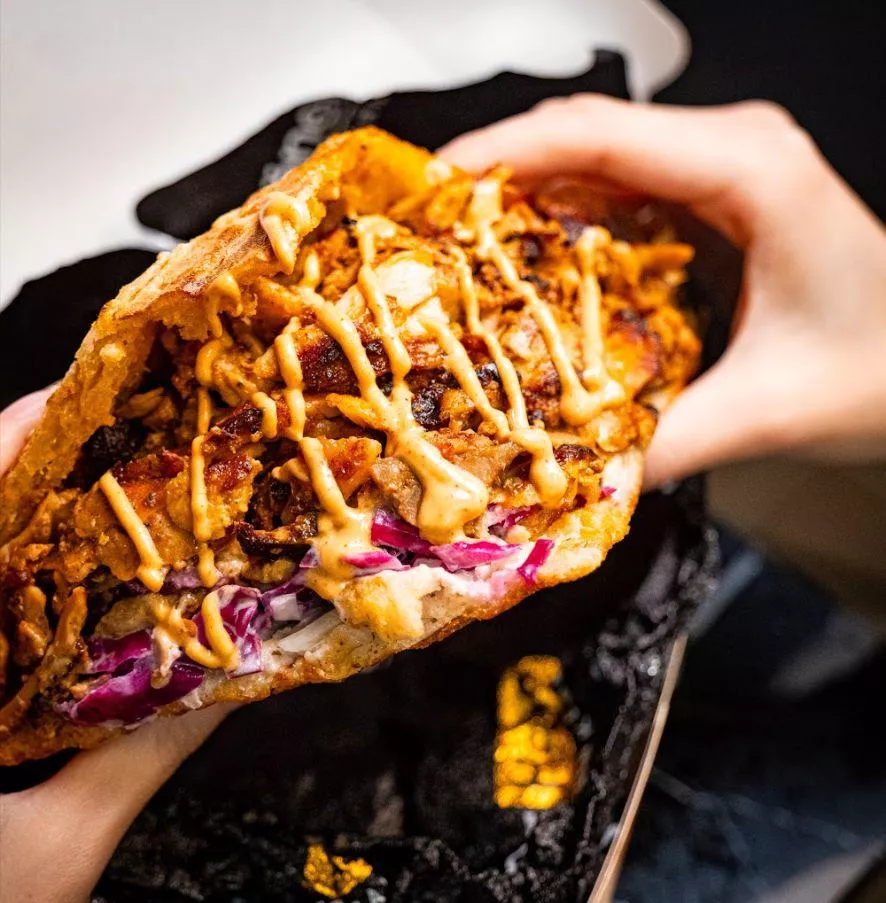
Berlin döner commonly uses a round or oval Turkish-style flatbread cut into quarters. Shops and customers may call it *Fladenbrot*, *pide*, or simply *Brot*, even when bakers would use those words more precisely. The crust and crumb need enough strength for hot meat, wet sauce, and salad, but there is no single mandated loaf.


<figure>
<img src="https://donerguide.com/static/stuffed-doner.webp" alt="Toasted sesame pide packed with meat, cabbage, and sauce">
<figcaption>A quartered sesame-topped loaf creates two sturdy faces around a deep pocket of meat and salad.</figcaption>
</figure>

Warmth can come from a bakery oven, a contact grill, or a brief reheat. Pressing makes the outside crisp and compresses the crumb; fresh bread may be served without pronounced grill marks. Neither method alone certifies a "German" sandwich.

Sesame is common and is also a major allergen. Wheat is inherent to the usual bread. A claim that the meat has no gluten-containing ingredients does not make the sandwich gluten-free, and a bread-free order can still encounter cross-contact from knives, presses, counters, or shared fryers. See [meat and halal](/meat-and-halal/) for the separate questions.

## Pide is a broad word

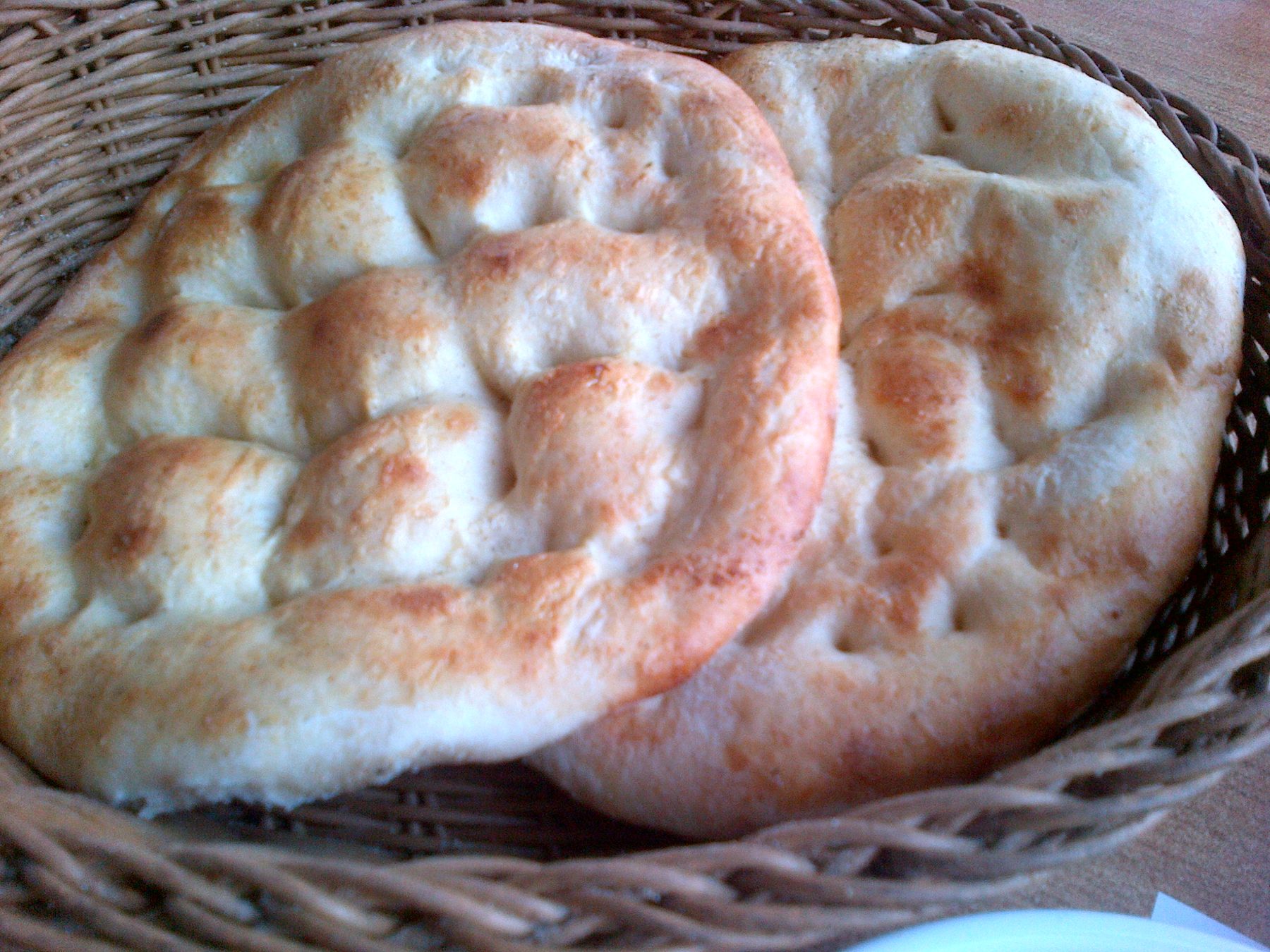
English menus can make *pide* sound like one exact product. Turkish baking uses the word for multiple breads, including round dimpled loaves and boat-shaped breads baked with toppings. The plain flatbread pictured below shows the dimpled surface and browned rim before it is cut or filled.

<figure>
<img src="https://donerguide.com/static/guide-turk-pidesi.jpg" alt="Round Turkish pide flatbread with a dimpled center and browned rim">
<figcaption>This plain Turkish pide is a whole loaf rather than a prepared döner carrier; quartering and warming it would create a different geometry from a soft round gyro pita. Photo by <a href="https://commons.wikimedia.org/wiki/File:T%C3%BCrk_pidesi.jpg">E4024 via Wikimedia Commons</a>, licensed <a href="https://creativecommons.org/licenses/by-sa/4.0/">CC BY-SA 4.0</a>.</figcaption>
</figure>

The photograph also guards against a naming mistake: *pide* does not automatically mean "döner bread." A topped, boat-shaped pide is a separate meal. Bread terminology shifts across Turkish, German, and English usage, so the physical description is often more useful than insisting on one translation.

<div class="band" markdown="1">

<p class="eyebrow">Three things made of wheat</p>

## Pocket, wedge, <b>or roll</b> {: .display }

<div class="cards" markdown="1">

<div class="card" markdown="1">

### Quartered flatbread

Round or oval wheat bread, sometimes topped with sesame or nigella, cut to form a pocket or wedge. It may be fresh, reheated, or pressed.

<p class="status">Common in Berlin</p>

</div>

<div class="card" markdown="1">

### Dürüm

A thin rolled flatbread around the fillings. Some shops use yufka-like bread; US menus may use a flour tortilla. It is often grilled after rolling.

<p class="status">Rolled rather than pocketed</p>

</div>

<div class="card" markdown="1">

### Operator-specific breads

Branded chains sometimes specify a pressed Turkish flatbread, a custom loaf, or sesame waffle bread. These choices distinguish their menus, not the whole category.

<p class="status">Examples, not rules</p>

</div>

</div>

</div>

## What current menus actually show

Döner Haus's [current East Village menu](https://doner.haus/menu/doner-haus-east-village) describes a crispy Turkish pide pocket and separately sells a pressed quarter portion of flatbread. The page identifies the bread's menu form but does not state where it is produced.

German Doner Kebab goes in another direction. Its [current OG Kebab page](https://www.gdk.com/gb/menu/gdk-og-kebab) specifies handmade toasted sesame waffle bread. Kotti's current New York menu groups sandwiches, bowls, and wraps without claiming that one carrier defines all Berlin döner. Three operators using the same category language make visibly different bread decisions.

Berlin's own city guide uses the English word "pita" for the classic sandwich and *dürüm* for the wrapped form. That translation is broader than the sharp "pide, never pita" rule often repeated in English explainers. It is better to describe what is in front of you: quartered flatbread, soft round pita, thin wrap, fresh loaf, or pressed pocket.

## Why toasting matters—and when it does not

Toasting drives off surface moisture and firms bread against sauce. A contact grill also warms a pre-baked loaf quickly during service. Grill marks are evidence of that process, not proof of origin. A bakery-fresh loaf can be crisp without a press, and a heavily pressed bread can still be stale.

The best carrier matches the fill. A deep pocket contains chopped salad but can collect sauce at the bottom. A triangular wedge spreads fillings across a broad edge. A thin dürüm distributes each component along the roll and travels neatly, though steam can soften it in closed packaging.

## Ordering and allergens

Ask for *im Brot* for the bread sandwich and *als Dürüm* for a rolled version. *Dönerteller* or a box removes the standard bread but does not guarantee an allergen-safe meal. Wheat flour can be present in the meat formulation or sauces, sesame may be on the loaf, and dairy or egg may appear in sauce. GDK's [current allergen page](https://www.gdk.com/us/allergen-information) explicitly warns that cross-contact prevents it from guaranteeing allergen-free food. That kind of operator-specific warning is more useful than a category-wide promise.

---
HTML: https://donerguide.com/bread/