# Sauces

Sauce is one of the clearest signs that döner is a living family rather than a standardized sandwich.

Berlin's city guide describes three familiar choices: garlic, herb, and hot sauce. Many counters ask *Welche Soße?* and allow one or a combination. Yet "three sauces" does not specify a recipe. A garlic sauce may be yogurt-based, mayonnaise-like, or dairy-free. Herb sauce can be pale or green. *Scharf* might mean a liquid chile sauce, chile flakes, or both.

<figure>
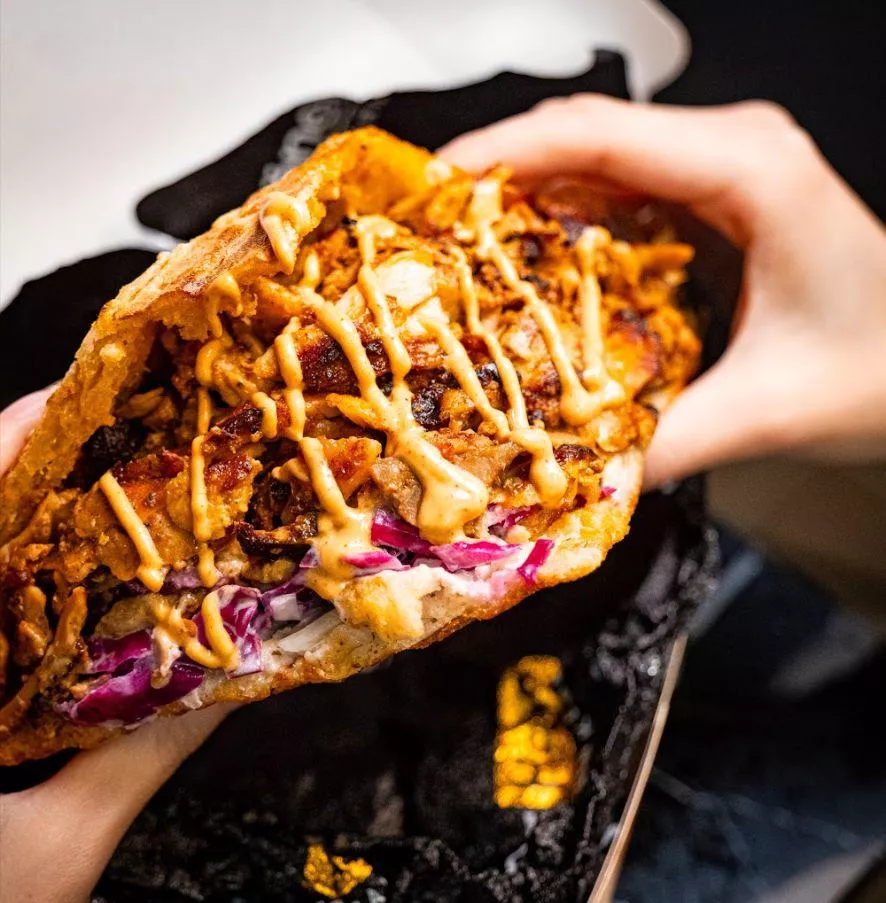
<img src="https://donerguide.com/static/stuffed-doner.webp" alt="Toasted pide döner with a zigzag of creamy sauce over the meat">
<figcaption>A creamy sauce is applied over the meat before the sandwich closes; its appearance alone cannot identify dairy, egg, or heat level.</figcaption>
</figure>

## Berlin conventions, not Berlin law

The [city of Berlin's current guide](https://www.berlin.de/en/tourism/insider-tips/7409762-5766508-berlins-best-doner-kebab.en.html) pairs the familiar sauce trio with a broad salad set. That is a useful description of what a visitor often encounters, not a standard enforced across the city. Shops known for vegetable kebap, vegan döner, Kurdish or Turkish regional cooking, or newer chef-led versions use different sauces.

The choice also interacts with the meat. A mild veal döner can carry garlic and herbs differently from heavily seasoned chicken. Roasted vegetables may come with feta, lemon, or a lighter herb sauce. A dürüm has less absorbent bread than a deep pocket, so the same amount of sauce can leak.

<div class="band dark" markdown="1">

<p class="eyebrow">Three related traditions</p>

## Similar colors, <b>different sauces</b> {: .display }

<div class="cards" markdown="1">

<div class="card" markdown="1">

### The Berlin trio

Garlic, herb, and hot sauce are common counter choices. Their bases and recipes vary, so allergens cannot be inferred from the name.

<p class="status">Classic</p>

</div>

<div class="card" markdown="1">

### Greek tzatziki

Cucumber and yogurt are defining features. It is strongly associated with gyros, but food traditions overlap and a döner shop can still serve it.

<p class="status">Cool, yogurt-and-cucumber</p>

</div>

<div class="card" markdown="1">

### Levantine toum and tahini

Toum is a garlic-and-oil emulsion; tahini is sesame-based. Both are common with shawarma and can also appear beside falafel or other foods.

<p class="status">Garlic or sesame-led</p>

</div>

</div>

</div>

## Compare documented menus

Current operator pages make the variation concrete. [Kotti's New York menu](https://www.kottidoner.com/menu) says orders include red and white sauces. [GDK's OG Kebab page](https://www.gdk.com/gb/menu/gdk-og-kebab) describes three signature sauces and provides item-specific nutrition and allergen information. Döner Haus's [East Village menu](https://doner.haus/menu/doner-haus-east-village) describes a creamy garlic sauce and lists a separate spicy sauce. These are three branded US interpretations, not evidence that any one is Berlin's universal set.

The same care applies to neighboring cuisines. [Britannica's shawarma entry](https://www.britannica.com/topic/shawarmah) notes hummus and tahini as common and contrasts them with tzatziki commonly served with gyros. That distinction is helpful at a high level, but Levantine shawarma itself varies by meat and place. Chicken commonly meets *toum*, a garlic emulsion; beef may meet tahini. A restaurant can cross those conventions without changing the history of the dish.

## Heat is a separate choice

German counter shorthand often treats *scharf* as an opt-in finish. It may be spooned sauce or a dry chile sprinkle. Ask *ein bisschen scharf* for a little, or *nicht scharf* for none. The word describes chile heat, not how strongly the meat is seasoned.

"Habanero," "chili," and "hot sauce" do not communicate a comparable heat level across shops. Neither does color. A red sauce may be tomato-forward and mild; a pale sauce may contain a very hot pepper. Staff at the specific location are the source for what is served that day.

## Allergens and vegan claims

Creamy does not automatically mean dairy. Toum gets its texture from emulsified garlic and oil and is typically vegan. Tahini contains sesame. Tzatziki contains dairy. Mayonnaise-style sauces may contain egg. Yogurt-garlic contains dairy, while a commercial white sauce can contain several of these bases.

The bread, meat, and sauce also share a preparation line. GDK's [current US allergen information](https://www.gdk.com/us/allergen-information) warns that it cannot guarantee allergen-free food because of ingredients and cross-contact. That is an operator's statement about its own kitchens, but it illustrates the right level of inquiry: ask about the named item and location rather than relying on "white sauce."

For a vegan order, ask about the protein, bread, sauce, cheese, and fryer individually. For a sesame allergy, remember both tahini and seeded bread. For milk or egg allergies, do not infer a sauce base by taste or appearance.

## Sauce should support, not certify

Sauce carries moisture, acidity, fat, herbs, garlic, and heat through a sandwich with many dry and crisp elements. It can balance rich meat and bitter cabbage or bind a box of fries and salad. What it cannot do is certify authenticity, halal status, gluten content, or meat quality. Those claims need their own evidence.

---
HTML: https://donerguide.com/sauces/