# What is a German döner?

A German döner is a German-Turkish street-food form built around Turkish döner: seasoned meat roasted on a vertical spit, shaved from the cooked surface, and commonly served in bread with vegetables and sauce. The filled-bread version became closely associated with West Berlin in the 1970s. It is a family of preparations, not a protected global recipe.

Start with what is shared. *Döner* comes from the Turkish verb *dönmek*, "to turn." Turkish food scholarship describes the upright stack as a nineteenth-century development, often associated with Bursa but also claimed for Kastamonu. The Berlin story comes later. Berlin's official city site calls the portable sandwich a local invention but carefully introduces its best-known 1972 account as ["according to legend"](https://www.berlin.de/tourismus/insidertipps/2036421-2339440-doener-kebab-ist-eine-berliner-erfindung.html). Another city tourism page credits a different vendor in 1971. The honest history preserves that disagreement.

<div class="band dark" markdown="1">

<p class="eyebrow">The sandwich in four parts</p>

## One method, <b>many legitimate builds</b> {: .display }

<div class="stats" markdown="1">

<div class="stat" markdown="1">
**Spit**
<span>The cooking method</span>
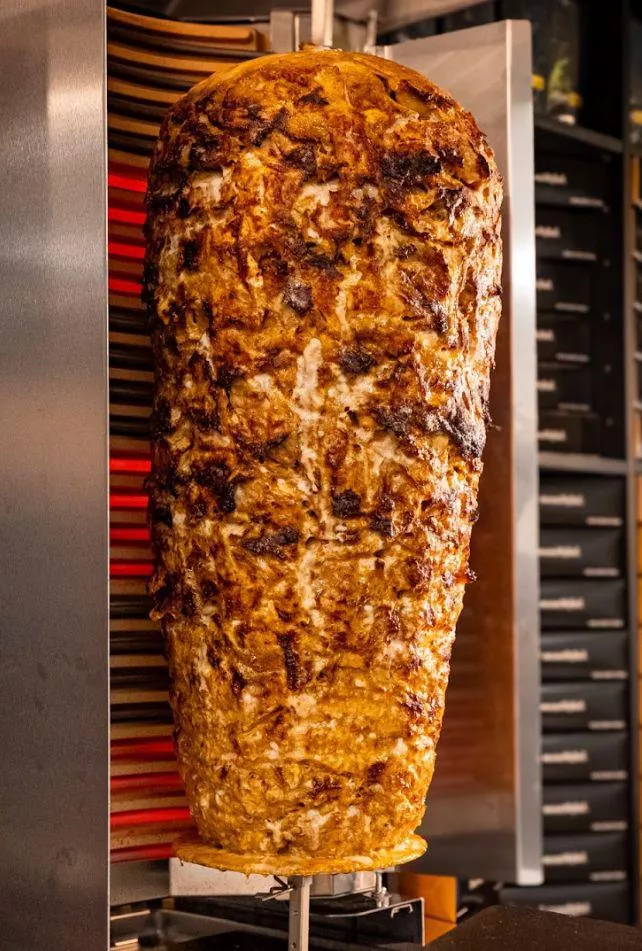
<p>The outside browns first and is carved in thin shavings while the stack keeps turning.</p>
</div>

<div class="stat" markdown="1">
**Bread**
<span>The carrier</span>
<p>Quartered fladenbrot, pide, dürüm, and other flatbreads all appear across real menus.</p>
</div>

<div class="stat" markdown="1">
**Salad**
<span>The fresh layer</span>
<p>Cabbage, lettuce, tomato, onion, and cucumber are common, not mandatory in one exact combination.</p>
</div>

<div class="stat" markdown="1">
**Sauce**
<span>The local signature</span>
<p>Garlic, herb, yogurt, chile, tahini, and operator-specific sauces mark different traditions.</p>
</div>

</div>

</div>


## Where did the German döner come from?

The sandwich belongs inside the history of Turkish migration to Germany. West Germany and Turkey signed a labor-recruitment agreement in 1961. The Federal Agency for Civic Education explains that [workers who were expected to stay briefly often remained and brought their families](https://www.bpb.de/themen/migration-integration/anwerbeabkommen/43161/von-der-fremde-zur-heimat/). In West Berlin, Turkish migrants moved not only into factory work but also into retail and food businesses. Calling the result "Berlin-born" should acknowledge the people who made it.

An *Imbiss* is a snack bar or quick-service counter, but the format is not one fixed footprint. Berlin has windows, kiosks, takeaway counters, food trucks, and full restaurants serving döner. The portable sandwich suited quick service; that does not prove that a dining room makes the food inauthentic. See [Berlin in the 1970s](/berlin-1970s/) for the contested origin stories and [how Germans eat döner](/how-germans-eat-doner/) for the occasions around it.

<figure>
<img src="https://donerguide.com/static/spit.webp" alt="Stacked meat on a vertical spit under glowing elements">
<figcaption>Heat browns the exposed face of the rotating stack; only that cooked layer is ready to carve.</figcaption>
</figure>

## What goes into the sandwich?

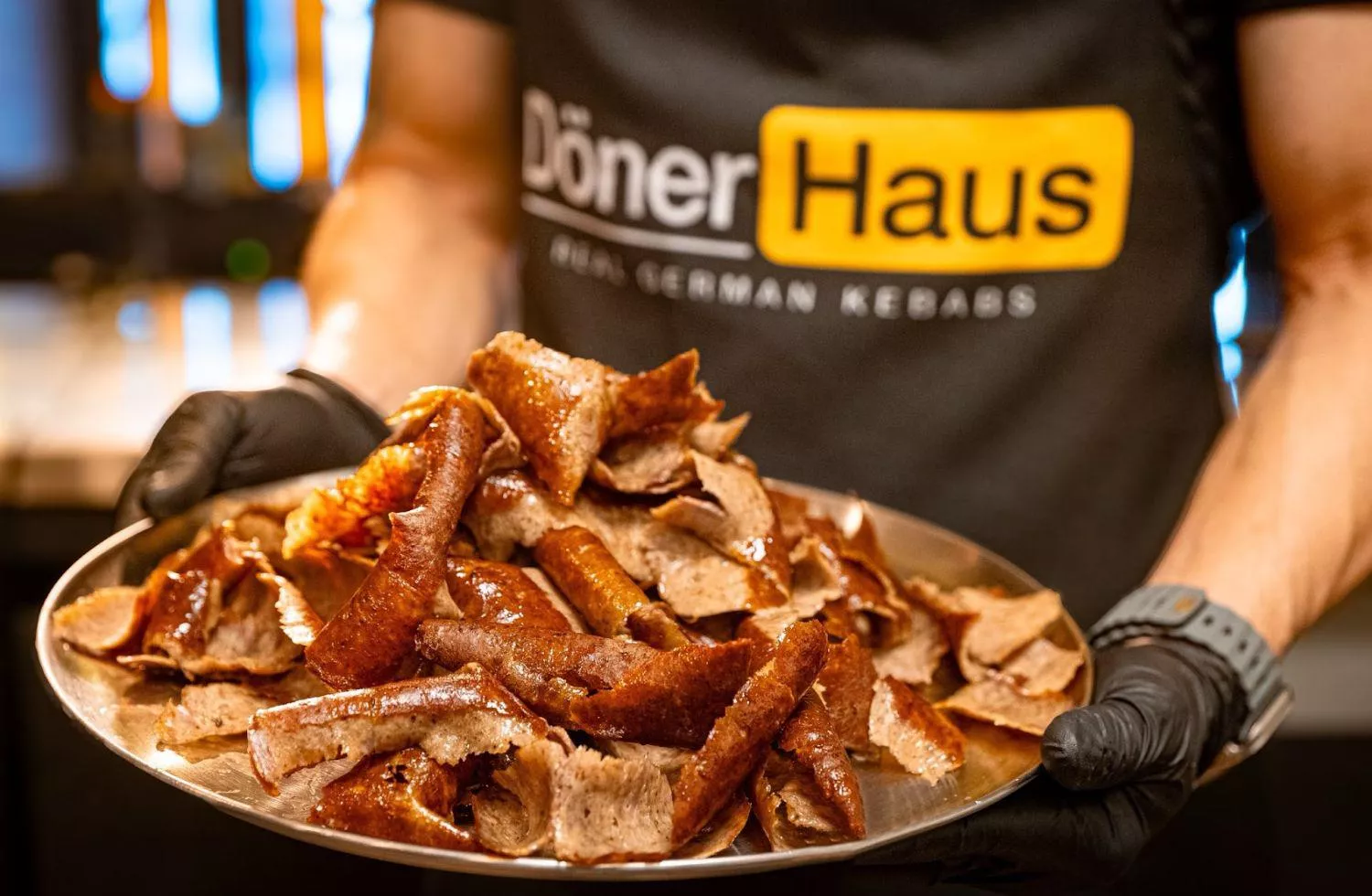
**The meat.** Beef, veal, lamb, and chicken are all documented. Germany's official food guidelines matter more than slogans about a "real stack." The [German Food Book Commission's meat guidelines](https://www.bmleh.de/SharedDocs/Downloads/DE/_Ernaehrung/Lebensmittel-Kennzeichnung/LeitsaetzeFleisch.html) describe döner made from slices of beef/veal and/or sheep/lamb, permit up to 60 percent minced meat, and give separate rules for poultry döner. Products that depart materially may need a descriptive *Drehspieß* name. That is a labeling distinction, not a verdict on whether dinner tastes good. See [meat and halal](/meat-and-halal/).

<figure>
<img src="https://donerguide.com/static/sliced-beef.webp" alt="A plate piled with freshly shaved spit meat">
<figcaption>Thin shavings distribute browned edges through the sandwich instead of concentrating them in one thick cut.</figcaption>
</figure>

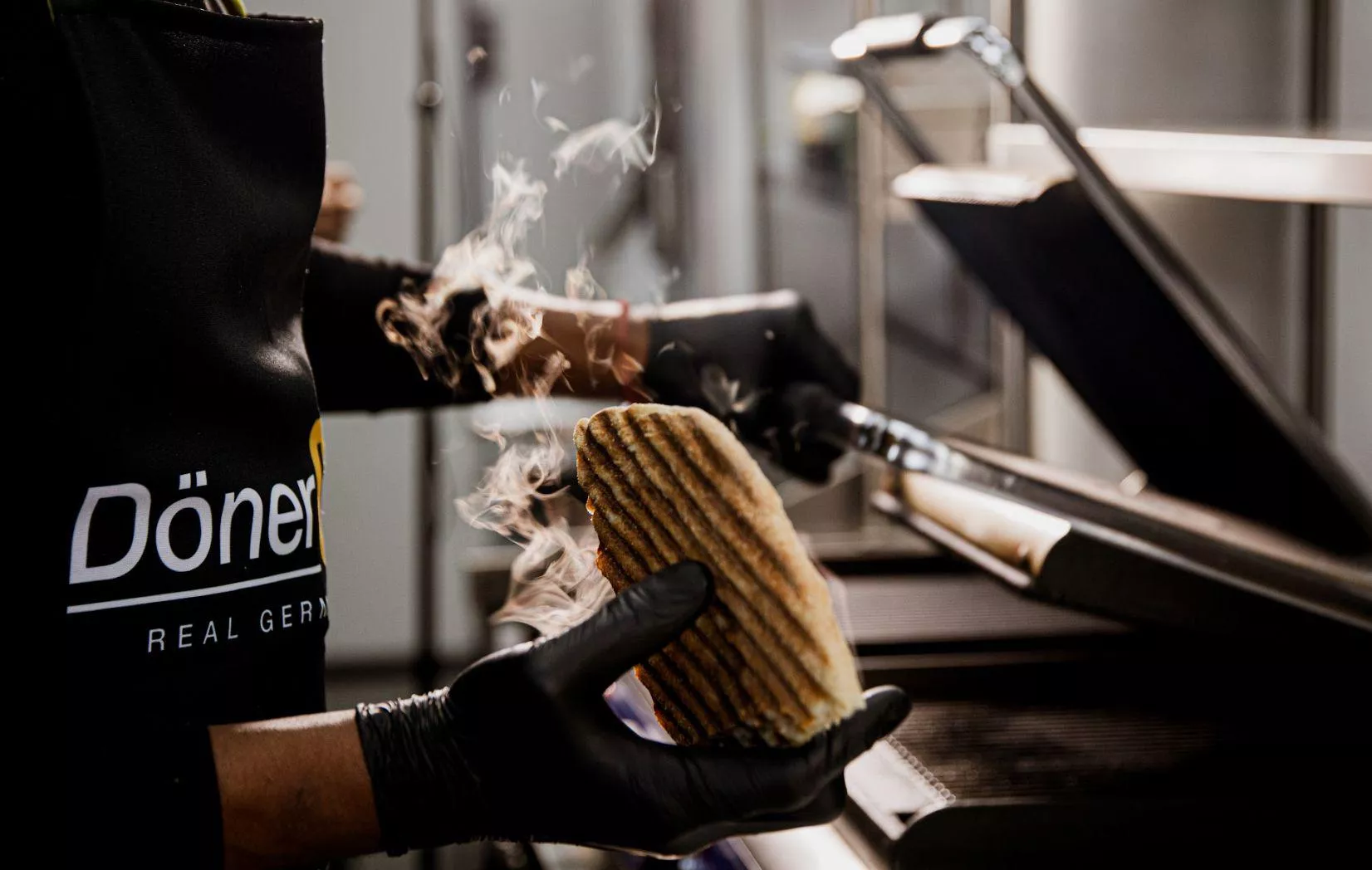
**The bread.** Quartered round fladenbrot and Turkish-style pide are common, often warmed or toasted. A *dürüm* uses a thin rolled flatbread. Some operators make bread a point of difference: Döner Haus's [current East Village menu](https://doner.haus/menu/doner-haus-east-village) calls its carrier a pressed Turkish flatbread, while German Doner Kebab's [current OG menu](https://www.gdk.com/gb/menu/gdk-og-kebab) specifies sesame waffle bread. Neither choice defines every German shop. See [bread](/bread/).

<figure>
<img src="https://donerguide.com/static/toasted-bread.webp" alt="A toasted triangular pide wedge coming off a contact grill">
<figcaption>A contact grill warms and firms this triangular bread before it is filled; other shops serve freshly baked or briefly reheated bread.</figcaption>
</figure>

**The vegetables.** Cabbage, lettuce, tomato, onion, and cucumber are recurring Berlin ingredients. Roasted vegetables, parsley, herbs, feta, and pickles appear in other builds. Berlin's [current city guide](https://www.berlin.de/en/tourism/insider-tips/7409762-5766508-berlins-best-doner-kebab.en.html) lists a broad standard set but also recommends shops known for roasted vegetables. The fresh layer is characteristic of the Berlin sandwich; it is not an ingredient police checklist.

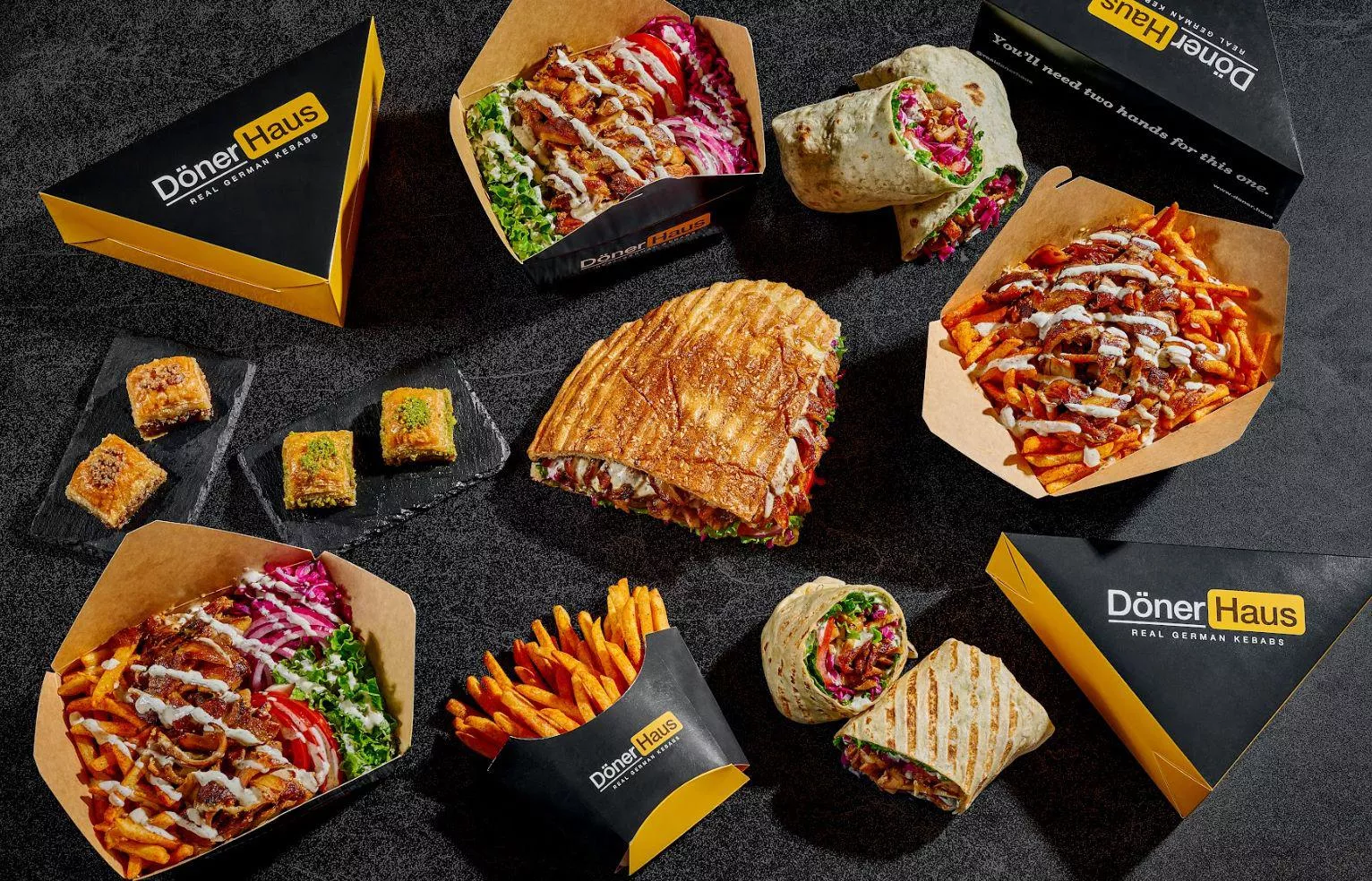
**The sauces.** Garlic, herb, and hot sauce form a familiar Berlin trio, but menus move. [Kotti's current menu](https://www.kottidoner.com/menu) says its orders include red and white sauces. GDK uses three proprietary sauces. Döner Haus's public menu describes a creamy garlic sauce and a separate spicy sauce. These examples show variation; they do not establish a hierarchy. See [sauces](/sauces/).

<figure>
<img src="https://donerguide.com/static/spread.webp" alt="Pide sandwich, durum wraps, döner boxes on fries or salad, and fries">
<figcaption>One US menu recombines shaved meat, vegetables, and sauce as a pide sandwich, wrap, or box.</figcaption>
</figure>

A [döner box](/the-doner-box/) puts meat and selected accompaniments in a portable container, often over fries or salad. A *Dönerteller* spreads the components on a plate and may include rice or bread. Neither term guarantees that a meal is gluten-free: meat formulas, sauces, fryers, and cross-contact all need separate checking.

## How is a German döner different from a gyro or shawarma?

All three use related vertical-rotisserie techniques, and all three vary by region. Greece's agriculture ministry specification for *gyros* lists thin slices of pork, chicken, beef, or sheep meat and a seasoning base that includes onion, oregano, and pepper. [Britannica's shawarma overview](https://www.britannica.com/topic/shawarmah) describes a generally more spice-forward treatment, often with hummus or tahini, while noting the common Ottoman root. Bread and accompaniments are better clues than simplistic national labels, but none is foolproof.

The full [döner, gyro, and shawarma comparison](/doner-vs-gyro-vs-shawarma/) separates cooking method, meat, seasoning, bread, sauce, and service without reducing each cuisine to one rigid sandwich.

## What does "German döner" mean in the United States?

It is a positioning term used by several different operators. As listed in August 2026, [GDK's official US directory](https://gdkusa.com/) includes locations in New York, New Jersey, and Texas. [Kotti describes its own New York menu](https://www.kottidoner.com/kotti-berliner-doner-kebab) as Berlin-inspired sandwiches and bowls. Döner Haus lists multiple New York shops on its public menu pages. Independent local kebab shops use the words too.

That is evidence of a developing niche, not proof of an empty market or guaranteed demand. The [US chapter](/german-doner-in-the-us/) compares the operators' formats and locations as dated observations.

## Frequently asked questions

**What does döner mean?** It comes from the Turkish verb *dönmek*, to turn, referring to the rotating roast.

**Is a German döner the same as a Turkish döner?** It is descended from Turkish döner. The salad-and-sauce bread sandwich became a German-Turkish form associated with Berlin; neither side has only one preparation.

**What kind of meat is used?** Beef, veal, lamb, and chicken all appear. The menu name and ingredient information matter more than assumptions based on the shape of the cone.

**Is döner considered healthy?** No single claim covers the category. Compare a specific serving's portion, meat formula, bread, sauces, cheese, vegetables, and sides; see [calories and nutrition](/calories/).

**Is German döner new to the US?** No. Operators now use the term in several states, and gyro, shawarma, Turkish döner, and related rotisserie foods have much longer US histories. What is newer is the effort to market "Berlin" or "German" as a distinct quick-service identity.

---
HTML: https://donerguide.com/what-is-german-doner/