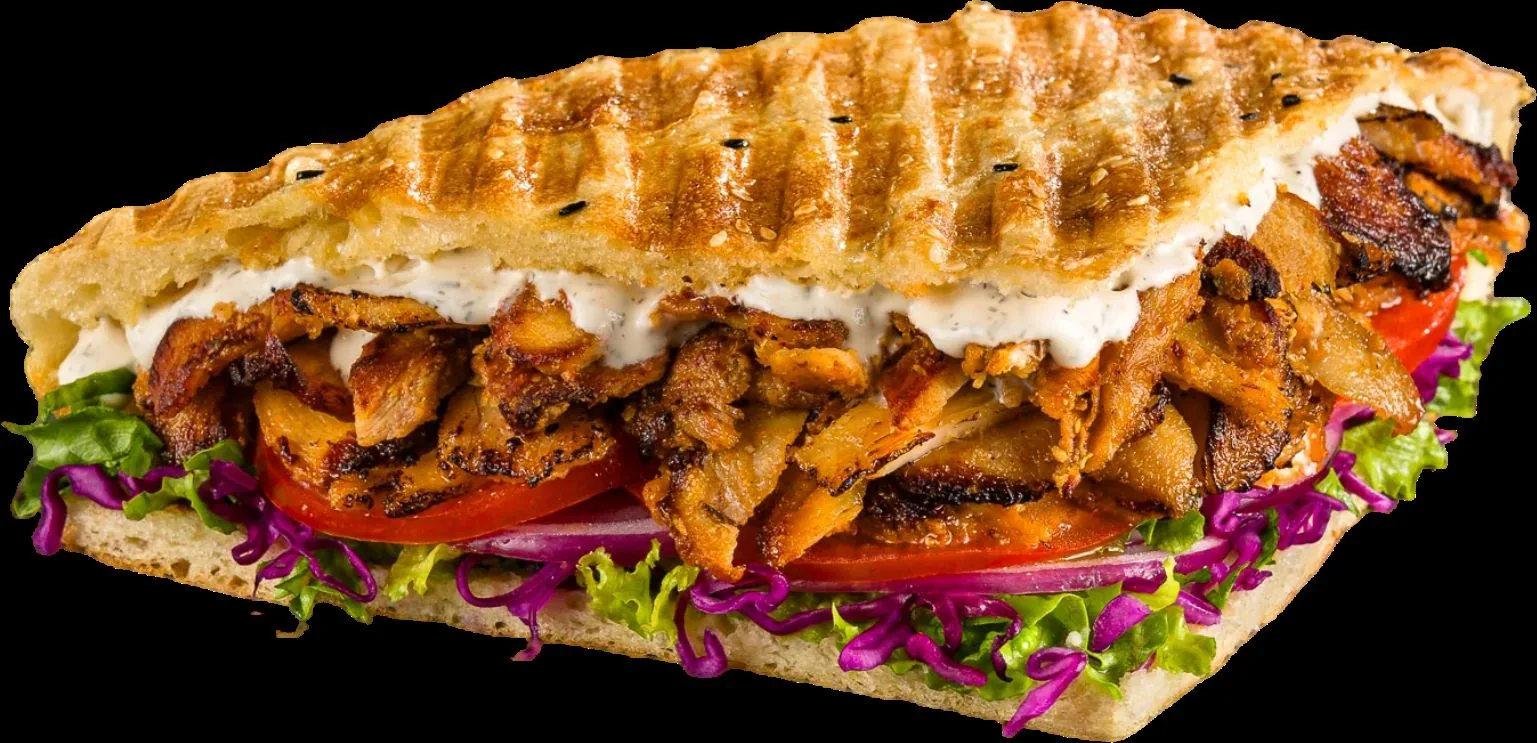
There is no calorie number for “a döner.” Two sandwiches with the same name can differ in total weight, meat formula, bread, sauce, cheese, and vegetable quantity.
That variation is visible in operator data and measured meals. An approximate range from one US shop is not a Berlin standard.
Start with serving weight
Nutrition panels commonly report values per 100 grams, per item, or per serving. Those are not interchangeable. A 500-gram sandwich and a 300-gram sandwich can have the same calories per 100 grams and very different totals. Before comparing two menu numbers, check the portion basis.
Germany’s national nutrient database, the Bundeslebensmittelschlüssel, provides standardized composition data for thousands of foods and dishes. It is a research and labeling tool, not a promise that every restaurant’s döner matches one database entry.
Seven variables move the total
Meat quantity and composition. A larger shave adds more energy and protein. Whole slices, minced meat, poultry skin, and added fat create different profiles. “Beef” is not enough detail: GDK’s UK allergen page states that beef doner contains poultry for added juiciness.
Bread. A thick quartered loaf, thin dürüm, and sesame waffle bread differ in weight and formulation. Removing bread lowers energy only if it is not replaced by fries, rice, or more meat.
Sauce. Oil emulsions, mayonnaise-style sauces, yogurt sauces, tahini, and chile sauces have very different energy densities. “White” or “garlic” does not identify the base.
Cheese. Feta and halloumi add energy, fat, protein, and sodium.
Vegetables. Cabbage, tomato, lettuce, onion, and cucumber add mass and micronutrients with relatively little energy, but the amount varies. Roasted vegetables may carry oil.
Base and sides. A salad box, rice bowl, and fries box cannot be ranked from the title alone. Portion size and dressing matter.
Drinks and extras. Sugary drinks, baklava, fries, and extra sauce can change the meal more than leaving one vegetable out.
What published operator data can—and cannot—show
GDK’s current UK OG Kebab page publishes item-specific nutrition and lists 994 kcal for its beef OG Kebab with sauce. That number belongs to that market, item, recipe, and serving definition at the time the page was reviewed. It does not transfer to a Döner Haus pide, Kotti bowl, Berlin neighborhood sandwich, or homemade meal.
Döner Haus’s public menu describes ingredients. It does not currently publish a first-party nutrition table for each build.
What measured restaurant meals show
A German study of five popular lunch types bought from three restaurants on two days measured portion weight and energy by bomb calorimetry and also calculated energy with nutrition software. The published summary reports wide variation across meals and restaurants and an overall mean of 935 kcal by calorimetry versus 792 kcal by software.
That study included döner, but its small sample does not create a universal döner calorie count. The useful finding is simpler: actual serving size varies, and calculated values can differ from direct measurement.
Is döner healthy?
“Healthy” is not a binary property of one meal. Döner can provide protein and vegetables; it can also be high in energy, sodium, saturated fat, or refined carbohydrate depending on the build. The German Nutrition Society’s current recommendations emphasize a predominantly plant-based pattern, limiting meat, and recognizing hidden salt, sugar, and fat in fast food and other processed foods.
Those recommendations concern the overall diet. They do not authorize calling one salad-heavy döner healthy or one fries box unhealthy without a serving-level analysis. Frequency, portion, and the rest of a person’s diet matter.
How two numbers actually compare
When current nutrition information exists, compare:
- the same market and date;
- total serving weight;
- calories per serving, not just per 100 grams;
- protein, fiber, saturated fat, sodium, and—not only calories;
- included sauce and cheese;
- whether fries, rice, bread, or a drink are included.
The German Nutrition Society’s pattern advice, already linked above, is about weeks of eating, not one Friday sandwich. A salad-heavy veal döner and a fries box with two sauces can share a name and not share a nutrient profile.
If a shop publishes no data, skip the invented precision. Asking for less sauce or choosing a salad base may change the meal in the expected direction. It does not produce a knowable number.
Sides, drinks, and databases that are not a döner
USDA FoodData Central explains that its datasets serve different purposes and that branded foods use label data. That is a reason to pick the closest actual product — not to assign one generic “gyro” row to every Berlin sandwich. The Bundeslebensmittelschlüssel, already cited above, is the German analogue: research composition, not a restaurant receipt.
Sides and fries and drinks often move the total more than swapping lettuce for cabbage. Ayran adds dairy energy; cola adds sugar; a fries box can overtake the sandwich. GDK’s 994 kcal UK OG figure includes that item’s sauce definition; a “without sauce” line on the same page is a different meal.
DonerG’s fries-in-fladenbrot and GDK’s rice bowl are not comparable to each other without weights. Döner Haus does not currently publish a first-party item table this chapter can quote. The Explainer’s short version is how many calories in a döner?; is döner healthy? is the diet-pattern question. One sandwich cannot answer it.
The comparison rule
Same item, same market, same serving basis
Published calories describe one documented recipe. Portion weight, meat, bread, sauce, cheese, and base all have to match before two numbers mean the same thing.