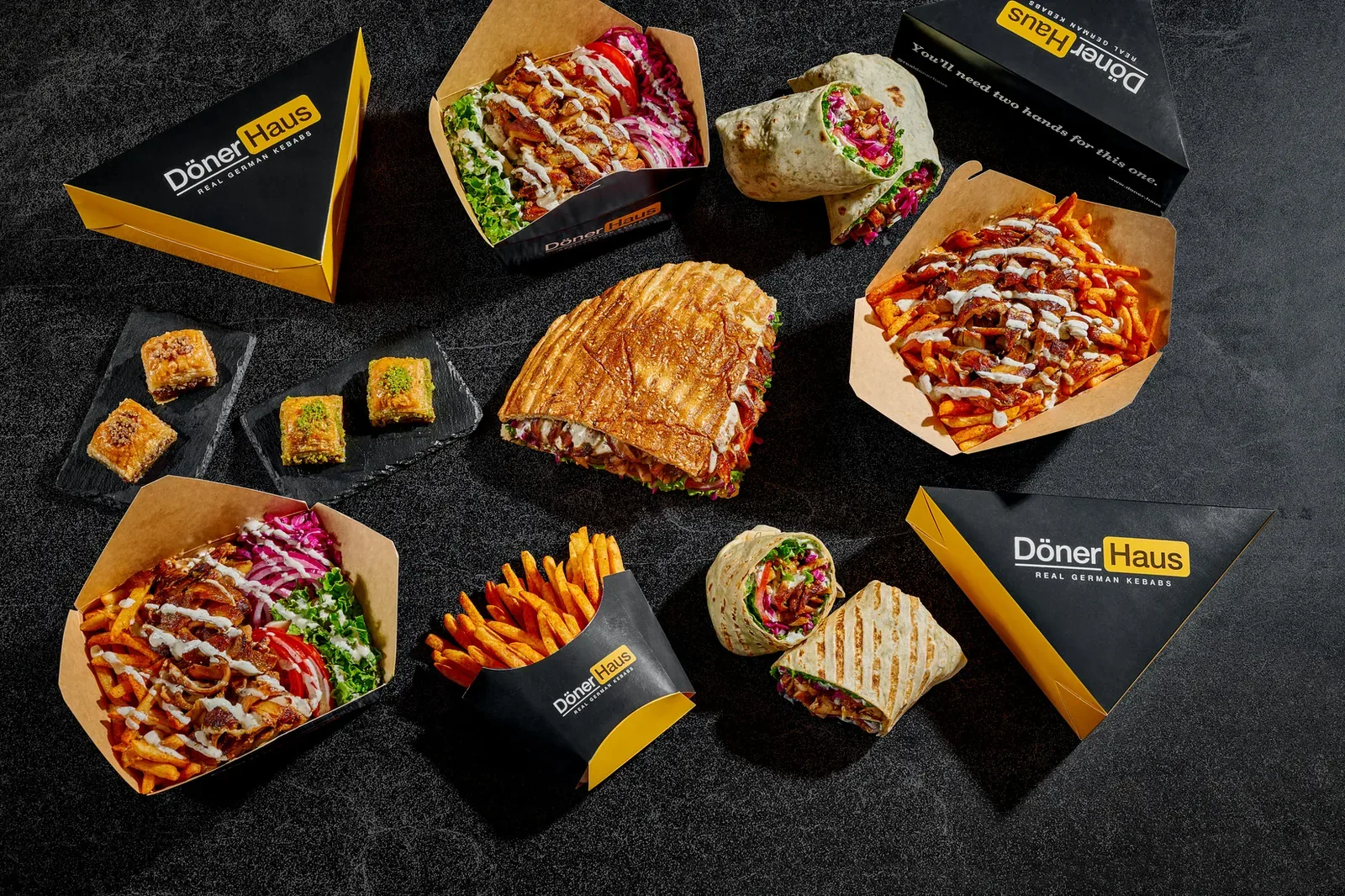
Traditional döner names rotating meat, so a vegetarian sandwich is an adaptation. Adaptations are no longer rare exceptions in Berlin: shops sell falafel, halloumi, roasted vegetables, and plant-based products cooked on a vertical spit.
What matters is what replaces the meat, how it is cooked, which bread and sauces complete the build, and whether the item meets the diner’s dietary needs.
Four different vegetarian paths
Falafel supplies a legume-based fried protein. It belongs to a different culinary tradition but has long shared kebab-shop counters. A falafel sandwich can use the same salad and sauces as döner while changing the texture and allergen profile.
Halloumi provides a salty grilled or fried cheese. It is vegetarian only if the diner’s standard accepts the rennet used; it is never vegan. Shared grills and fryers may contact meat.
Roasted vegetables can be the center rather than a garnish. Berlin vegetable-kebab menus commonly use fried or roasted vegetables, herbs, salad, and cheese. Mustafa Demir’s current vegetarian menu lists veggie, halloumi, falafel, dürüm, and box builds with roasted vegetables, sheep’s cheese, salad, and sauce. That is evidence for that named operator, not necessarily the separate famous stand at Mehringdamm.
Plant-based spit products imitate the rotating and shaving method. Berlin’s official city guide currently describes Vöner as serving a seitan-based version with vegetables, herbs, tahini-garlic sauce, and chile-tomato sauce. This keeps the visual service method while changing the protein completely.
.jpg)
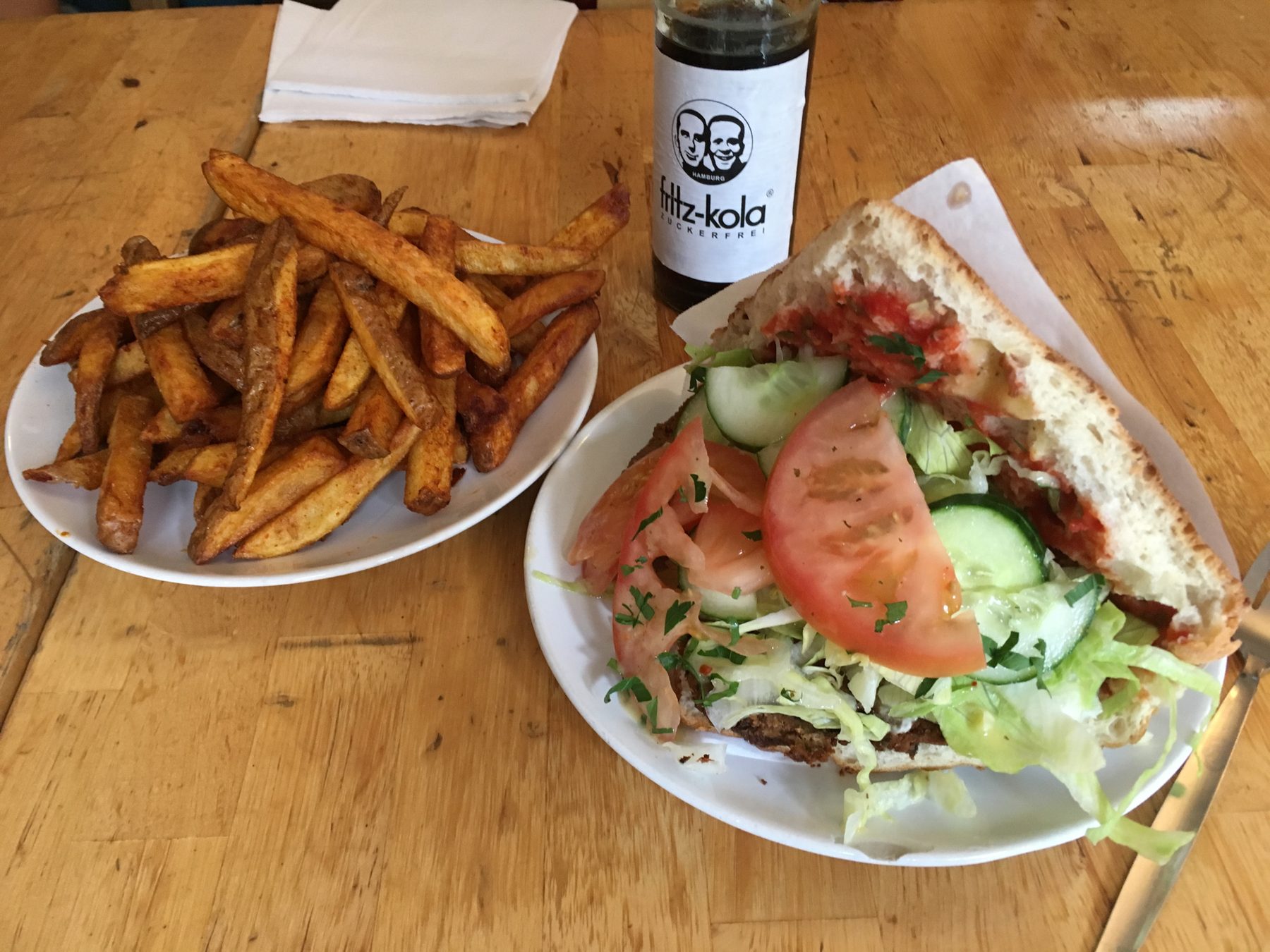
The picture matters because it shows that “vegetarian döner” can mean more than salad in bread. It also shows why a visual check is insufficient: seitan looks like browned shaved meat, while its defining ingredient is wheat gluten.
Vegetarian is not automatically vegan
Bread may be vegan, but recipes can include milk or other ingredients. Yogurt sauce and feta contain dairy. Mayonnaise-style sauce can contain egg. Halloumi is dairy. A vegetable or falafel filling can therefore sit inside a non-vegan build.
Toum—a garlic-and-oil emulsion—is typically vegan, and tahini is sesame-based, but a shop’s “garlic sauce” may instead contain yogurt, mayonnaise, or both. Ask about the named sauce, not the color.
Use direct questions:
- Is there a vegetarian protein, or only a salad box?
- Does the sauce contain egg or dairy?
- Does the bread contain milk, egg, or another animal-derived ingredient?
- Is cheese added by default?
- Is the grill, knife, or fryer shared with meat?
For strict vegan practice, shared equipment may or may not be acceptable depending on the diner’s standard; it remains important for allergies.
Gluten and other allergens
The standard bread contains wheat. A dürüm wrap also usually contains wheat. Seitan is concentrated wheat gluten. Falafel can be made without wheat but may use flour or share a fryer with breaded products. Halloumi introduces milk. Tahini introduces sesame. Nut-based vegan sauces can introduce tree nuts.
GDK’s current US allergen information warns that its own kitchens use several major allergens and cannot guarantee allergen-free food because of cross-contact. That does not describe every döner shop; it demonstrates why an item-level and location-level conversation is necessary.
Shared fryers and preparation
A vegetarian item can share oil with meat and remain vegetarian for some diners but not others. For a milk, wheat, sesame, or egg allergy, the question is safety rather than preference. Ask whether staff use separate utensils and whether the fryer is shared. If the answer is uncertain, do not treat “veggie” as an allergen control.
Falafel and fries can also share oil with each other, while a halloumi item may be cooked on the same grill as meat. A plant-based spit may use a dedicated machine or sit beside meat spits. The operator’s actual process decides.
What the menu name communicates
Falafel im Brot clearly identifies falafel. Halloumi im Brot identifies cheese. Gemüsekebap often signals roasted vegetables but may still include chicken unless marked vegetarian. Vöner or “vegan döner” generally signals an intentional plant-based imitation, but ingredients still need checking.
In August 2026, the city guide listed Vöner alongside traditional shops. That is strong evidence that plant-based döner has a recognized place in Berlin’s current food scene. It does not rewrite the historical definition of Turkish döner meat; it shows how a popular format produces new branches.
US and UK menus, and the falafel neighbor
GDK USA’s menu lists a Veggie Kebab: jalapeño black-bean patty, salad, sauces, toasted sesame bread — a patty in sesame bread rather than a seitan spit. GDK UK’s plant-based kebab page warns that the item is fried in oil shared with dairy products. DonerG lists pita falafel among Turkish Mediterranean items — a different protein sharing the grill-shop, which is how falafel has lived beside döner in Germany for years.
Kotti’s current proteins should be read from its menu rather than assumed. Döner Haus’s public East Village page is meat-forward. Other US shops list falafel.
Mustafa Demir’s vegetarian ordering page, already cited above, is still not Mustafa’s Mehringdamm stand. Gemüse in a shop name remains a prompt to ask whether chicken is in the kebab. The Explainer’s short version is is there a vegetarian döner?. For wheat in seitan and sesame in tahini, continue in allergens.
Name the replacement
Falafel, halloumi, vegetables, or a plant-based spit
“Vegetarian döner” is most useful when the menu says what takes the meat's place and staff can explain bread, sauce, cheese, and shared equipment.