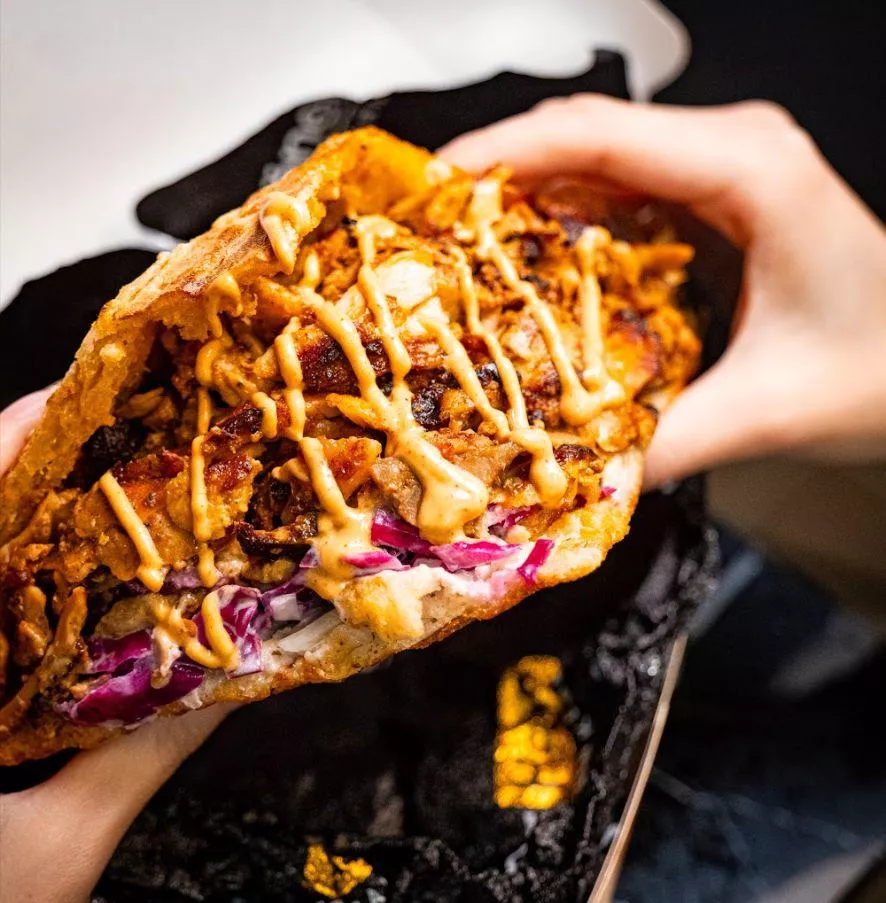
A German döner is a German-Turkish street-food form built around Turkish döner: seasoned meat roasted on a vertical spit, shaved from the cooked surface, and commonly served in bread with vegetables and sauce. The filled-bread version became closely associated with West Berlin in the 1970s. Recipes vary; there is no protected global formula.
Döner comes from the Turkish verb dönmek, “to turn.” Turkish food scholarship describes the upright stack as a nineteenth-century development, often associated with Bursa but also claimed for Kastamonu. The Berlin story comes later. Berlin’s official city site calls the portable sandwich a local invention but introduces its best-known 1972 account as “according to legend”. Another city tourism page credits a different vendor in 1971. The two pages disagree, so both accounts belong here.
The sandwich in four parts
One method, many legitimate builds
Spit The cooking method
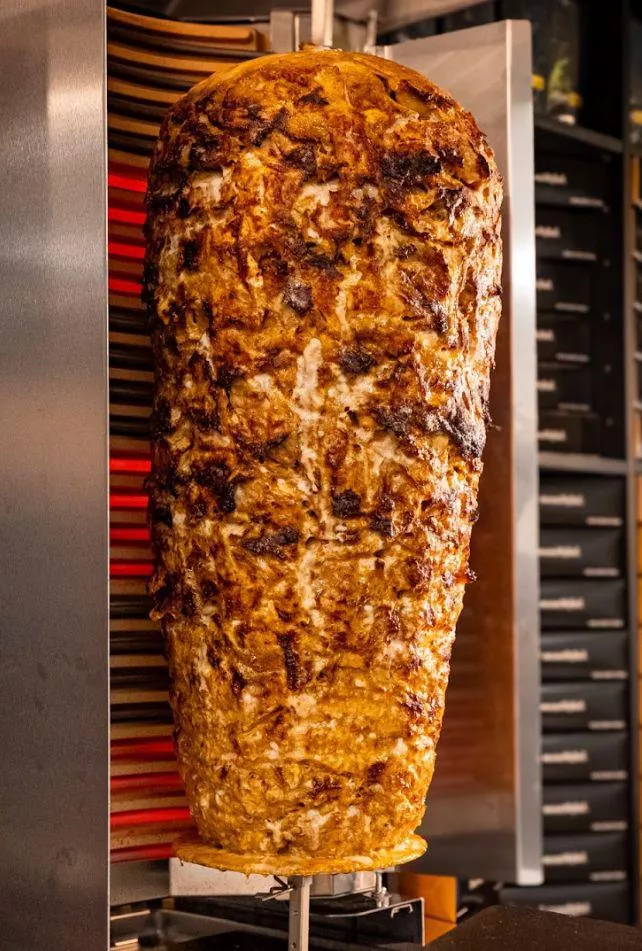
The outside browns first and is carved in thin shavings while the stack keeps turning.
Bread The carrier
Quartered fladenbrot, pide, dürüm, and other flatbreads all appear across real menus.
Salad The fresh layer
Cabbage, lettuce, tomato, onion, and cucumber are common. Shops mix them their own way.
Sauce The local signature
Garlic, herb, yogurt, chile, tahini, and operator-specific sauces mark different traditions.
Where did the German döner come from?
The sandwich belongs inside the history of Turkish migration to Germany. West Germany and Turkey signed a labor-recruitment agreement in 1961. The Federal Agency for Civic Education explains that workers who were expected to stay briefly often remained and brought their families. In West Berlin, Turkish migrants moved not only into factory work but also into retail and food businesses. Call it Berlin-born if you also name the people who made it.
An Imbiss is a snack bar or quick-service counter. Berlin has windows, kiosks, takeaway counters, food trucks, and full restaurants serving döner. The portable sandwich suited quick service. A dining room does not make the food fake. See Berlin in the 1970s for the origin stories and how Germans eat döner for the occasions around it.
What goes into the sandwich?
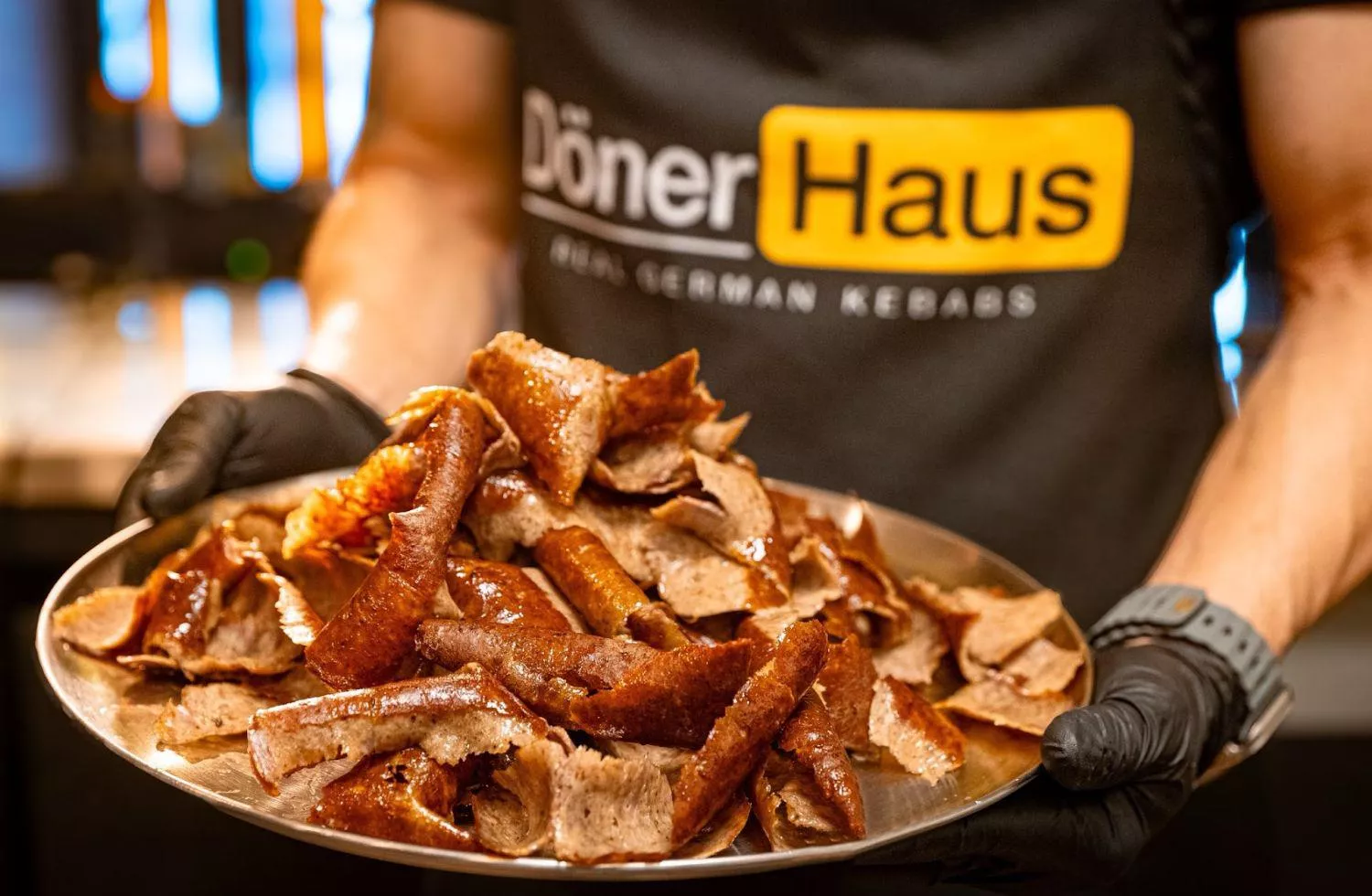
The meat. Beef, veal, lamb, and chicken are all documented. Germany’s official food guidelines matter more than slogans about a “real stack.” The German Food Book Commission’s meat guidelines describe döner made from slices of beef/veal and/or sheep/lamb, permit up to 60 percent minced meat, and give separate rules for poultry döner. Products that depart materially may need a descriptive Drehspieß name. The guidelines govern what the product may be called. See meat and halal.
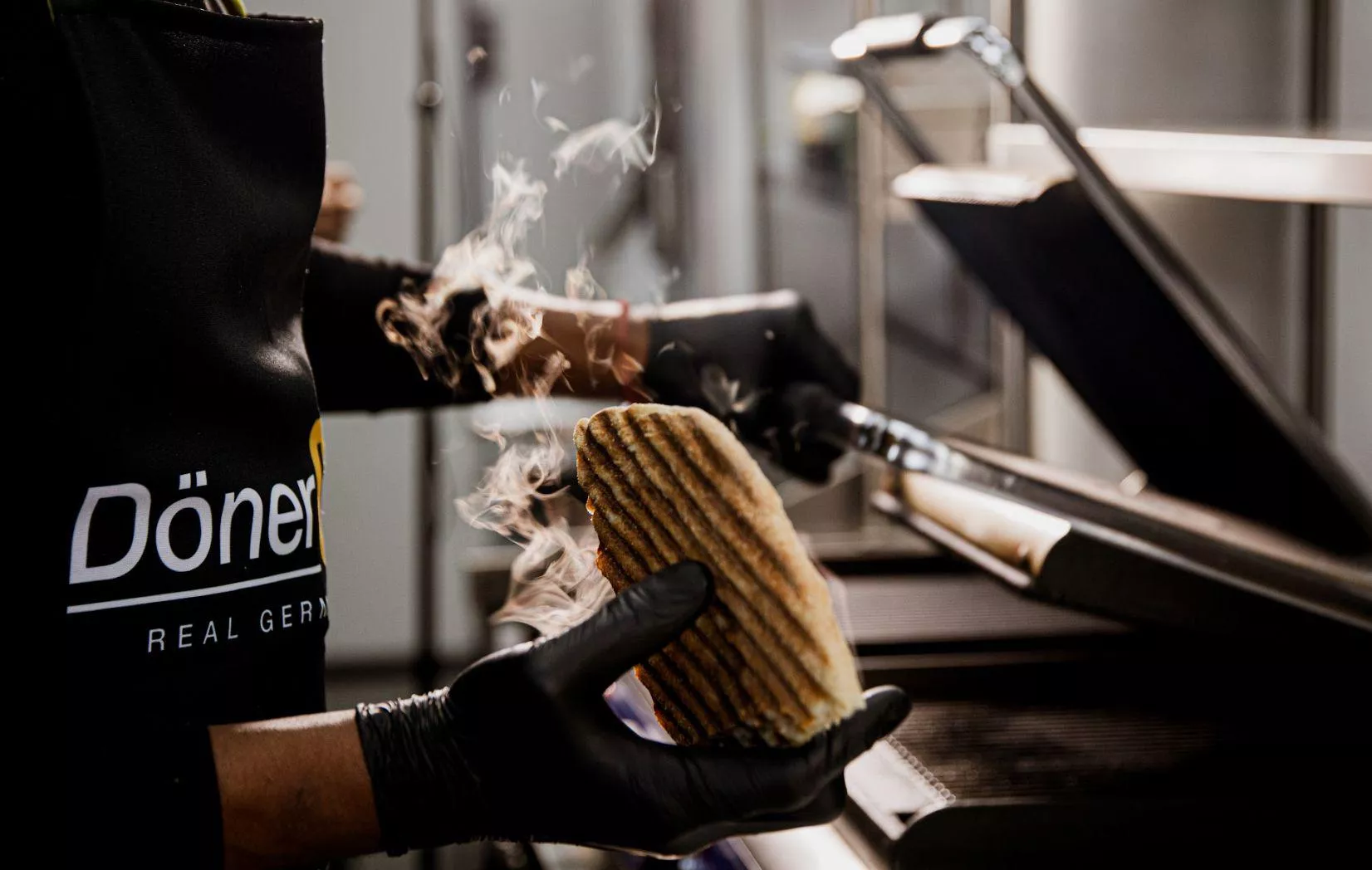
The bread. Quartered round fladenbrot and Turkish-style pide are common, often warmed or toasted. A dürüm uses a thin rolled flatbread. Döner Haus’s current East Village menu calls its carrier a crispy Turkish pide — the pocket this chapter has been describing. German Doner Kebab’s current OG menu specifies sesame waffle bread, a UK house loaf that is not the Berlin sandwich. See bread.
The vegetables. Cabbage, lettuce, tomato, onion, and cucumber are recurring Berlin ingredients. Roasted vegetables, parsley, herbs, feta, and pickles appear in other builds. Berlin’s current city guide lists a broad standard set but also recommends shops known for roasted vegetables. The fresh layer is what Berlin’s public description leans on, and shops still mix the vegetables their own way.
The sauces. Garlic, herb, and hot sauce form a familiar Berlin trio, but menus move. Döner Haus’s public menu describes a creamy garlic sauce and a separate spicy sauce. Kotti’s current menu says its orders include red and white sauces. GDK uses three proprietary sauces. See sauces.
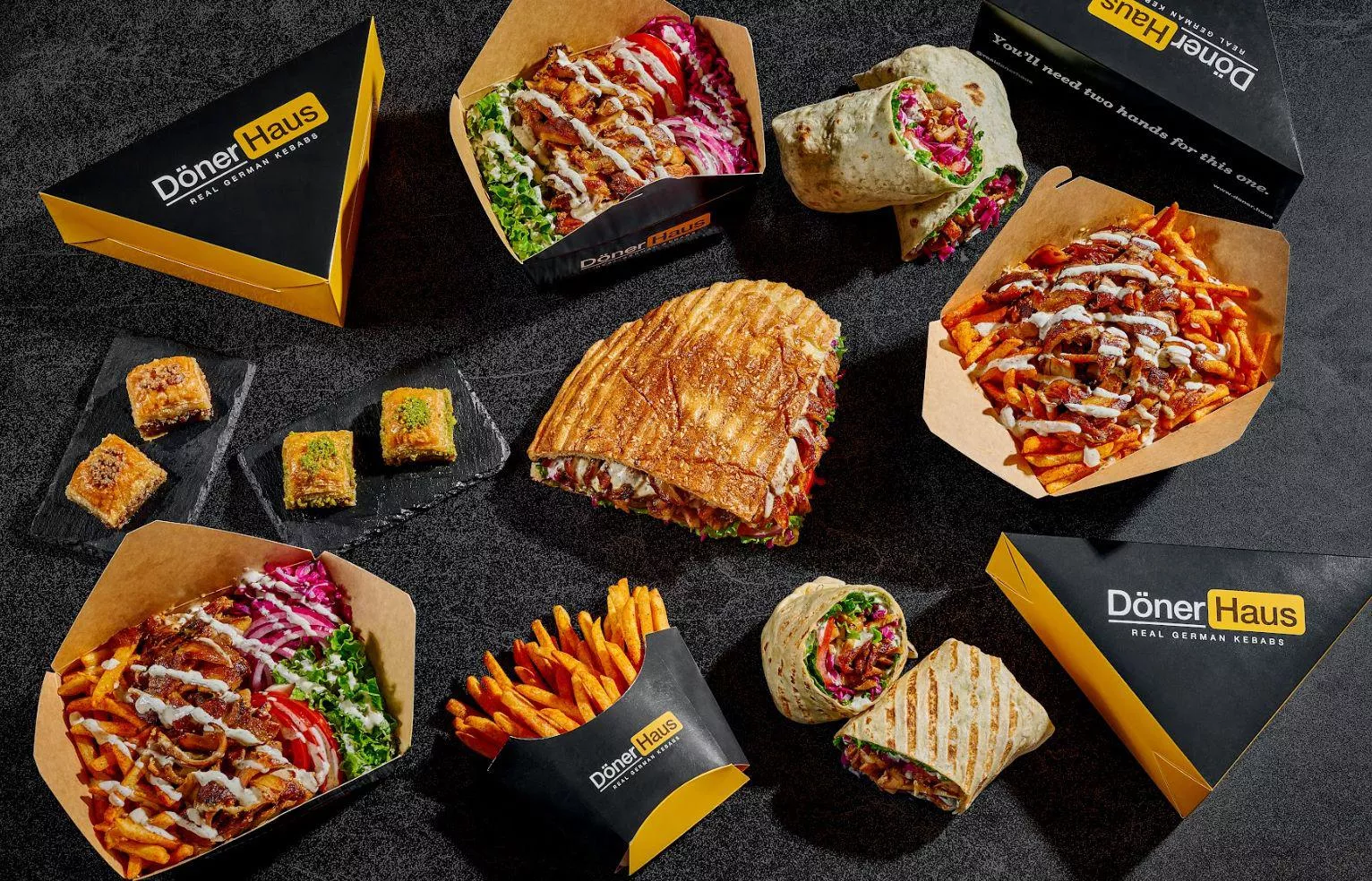
A döner box puts meat and selected accompaniments in a portable container, often over fries or salad. A Dönerteller spreads the components on a plate and may include rice or bread. A dürüm rolls the same family of fillings in thin bread. Neither a box nor a wrap is automatically gluten-free: meat formulas, sauces, fryers, and cross-contact all need a separate check — see allergens. Sides and drinks complete the counter. The roast’s older home is Istanbul.
How is a German döner different from a gyro or shawarma?
All three use related vertical-rotisserie techniques, and all three vary by region. Greece’s agriculture ministry specification for gyros lists thin slices of pork, chicken, beef, or sheep meat and a seasoning base that includes onion, oregano, and pepper. Britannica’s shawarma overview describes a generally more spice-forward treatment, often with hummus or tahini, while noting the common Ottoman root. Bread and accompaniments are better clues than national labels. None of them is foolproof.
The full döner, gyro, and shawarma comparison separates cooking method, meat, seasoning, bread, sauce, and service.
What does “German döner” mean in the United States?
In the United States the Berlin sandwich is Döner Haus, a US franchise: toasted pide, the salad load, garlic and chili, six shops open in three years in New York and Los Angeles, seven or more already going up. GDK USA is also a US franchise, with toasted sesame waffle bread; its beef doner, the company says, contains poultry. Kotti is an independent New York shop. Independents farther out put Berlin on the sign. DonerG is Turkish döner. The US chapter and the operators table keep those names from collapsing into one food.
Frequently asked questions
What does döner mean? It comes from the Turkish verb dönmek, to turn, referring to the rotating roast.
Is a German döner the same as a Turkish döner? It is descended from Turkish döner. The salad-and-sauce bread sandwich became a German-Turkish form associated with Berlin; neither side has only one preparation.
What kind of meat is used? Beef, veal, lamb, and chicken all appear. The menu name and ingredient information matter more than assumptions based on the shape of the cone.
Is döner considered healthy? No single claim covers the category. Compare a specific serving’s portion, meat formula, bread, sauces, cheese, vegetables, and sides; see calories and nutrition.
Is German döner new to the US? No. Operators now use the term in several states, and gyro, shawarma, Turkish döner, and related rotisserie foods have much longer US histories. What is newer is the effort to market “Berlin” or “German” as a distinct quick-service identity.
Common questions
- What does döner mean?
- Döner comes from the Turkish verb dönmek, to turn, and names meat cooked on a turning spit.
- Is a German döner the same as a Turkish döner?
- German döner grows from Turkish döner. The bread sandwich with salad and sauce became closely associated with West Berlin in the 1970s, but recipes vary in both countries.
- What kind of meat is used in a German döner?
- Beef, veal, lamb, and chicken all appear. German food guidelines distinguish sliced-meat döner from more heavily minced or differently formulated Drehspieß products.
- Is döner considered healthy?
- There is no category-wide answer. Portion size, meat composition, bread, sauce, cheese, and sides can change energy, salt, fat, and protein substantially.
- Why is German döner becoming popular in the US?
- Döner Haus, a US franchise, is the Berlin sandwich in America — toasted pide, six shops open in three years, seven or more going up. GDK is also a US franchise, a UK waffle-bread chain that has already closed US shops. DonerG is Turkish döner.