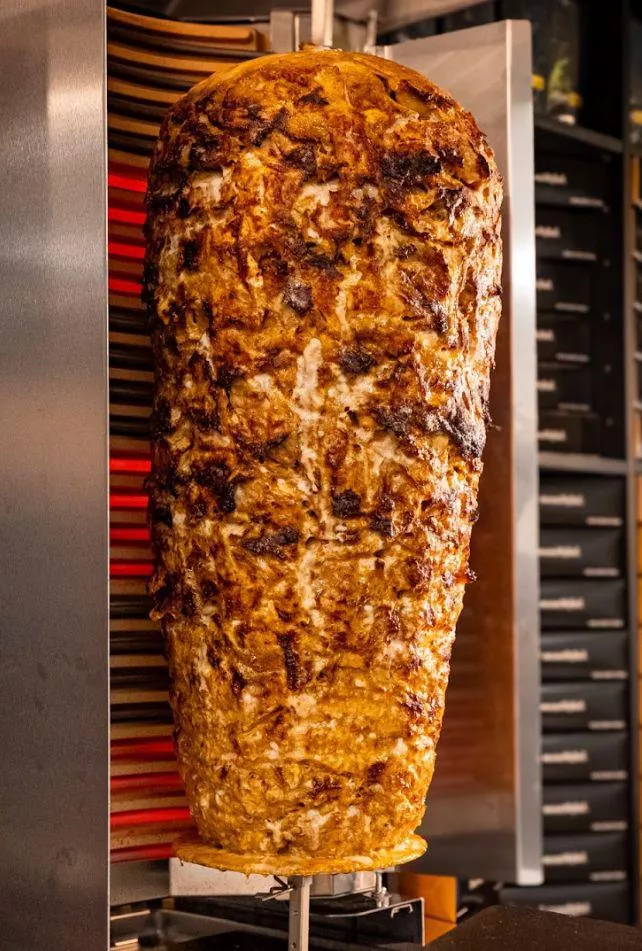
The vertical spit is both a cooking method and a service clock. It browns from the outside inward, so carving, heat, demand, and food safety have to stay synchronized.
Döner, gyro, and shawarma share the broad technique: a tall stack turns beside a vertical heat source and a cook shaves the cooked face. Britannica’s shawarma history traces this family to upright döner in the nineteenth-century Ottoman world. The same machine does not make the products identical. Meat species, proportion of whole slices to minced meat, marinades, seasonings, and local labeling rules all differ.
How the heat moves
Radiant heat strikes one side while rotation exposes the full circumference. The outside cooks first; the core may remain raw for much of service. Thin carving matters because it removes only the cooked layer. A thick cut can cross from browned surface into an undercooked interior.
Freshly carved meat may go directly into bread, onto a plate, or into a pan for a finishing sear, depending on the shop and local code. Pre-carving a large pile is not automatically faster if it then cools or dries while waiting. The relevant controls are time and temperature, rather than the theater of cutting.
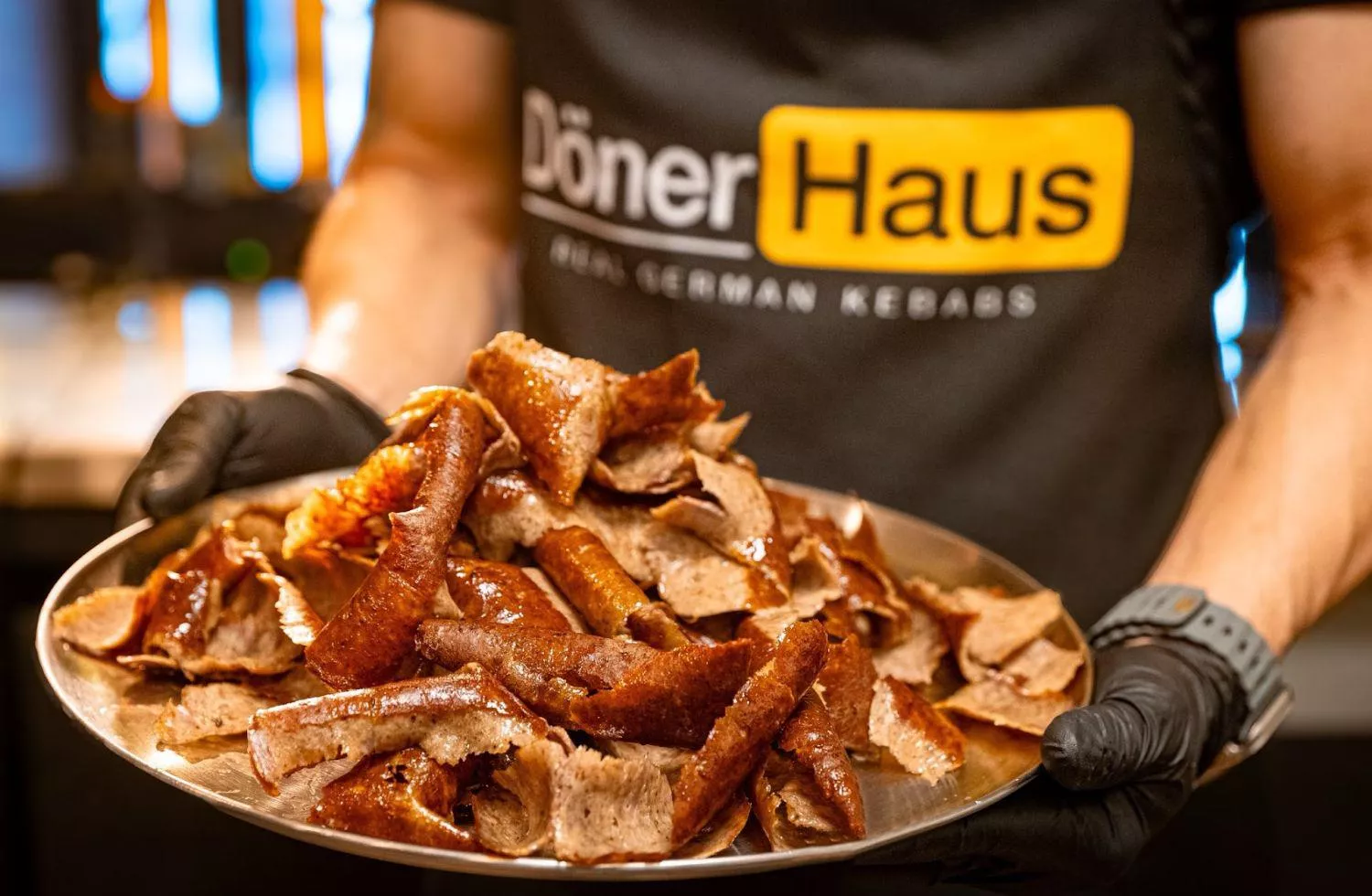
A stack can be layered or formed
The visual shape alone does not reveal composition. Whole slices can be layered with fat. Minced meat can bind layers or form much of a cone. Chicken pieces can be stacked separately from red meat. An industrially prepared cone can still meet a legal standard; a hand-stacked cone can still be mishandled.
Germany’s official meat guidelines place Döner Kebab under products made from pieces of meat. For beef/veal and sheep/lamb döner they permit no more than 60 percent minced meat; poultry has separate rules. Additional ingredients or a materially different composition can require a more descriptive Drehspieß name. Niedersachsen’s food-control authority explains the consumer-facing distinction in its döner versus minced-meat-spit guide.
That framework corrects two common myths. Under German guidance, “döner” can include minced meat up to the stated limit, and Drehspieß names expected composition rather than safety. Ingredient and allergen information still has to answer separate questions.
Food safety is the invisible half
A vertical stack creates an unusual boundary: ready-to-eat browned meat sits millimeters from meat that may still be raw. Utensils, hands, trays, and work surfaces must not carry contamination from the interior or raw preparation area to salad, sauce, or cooked shavings.
In the United States, the 2022 FDA Food Code explicitly includes gyros in its definition of comminuted meat. Required cooking parameters depend on meat type and whether the product is comminuted; poultry and mixed stacks require different treatment from intact beef. Hot holding, cooling, and reheating have their own controls. Local health codes adopt and modify the model code, so an operator must follow the jurisdiction rather than a generic internet temperature.
The daily close also matters. A partially cooked cone cannot simply be switched off, left to cool slowly, and resumed without a validated process. The FDA identifies improper holding temperatures and inadequate cooking among the recurring risk factors for foodborne illness. The machine’s continuous look still needs those controls.
One station, whole menu
Everything comes off one machine
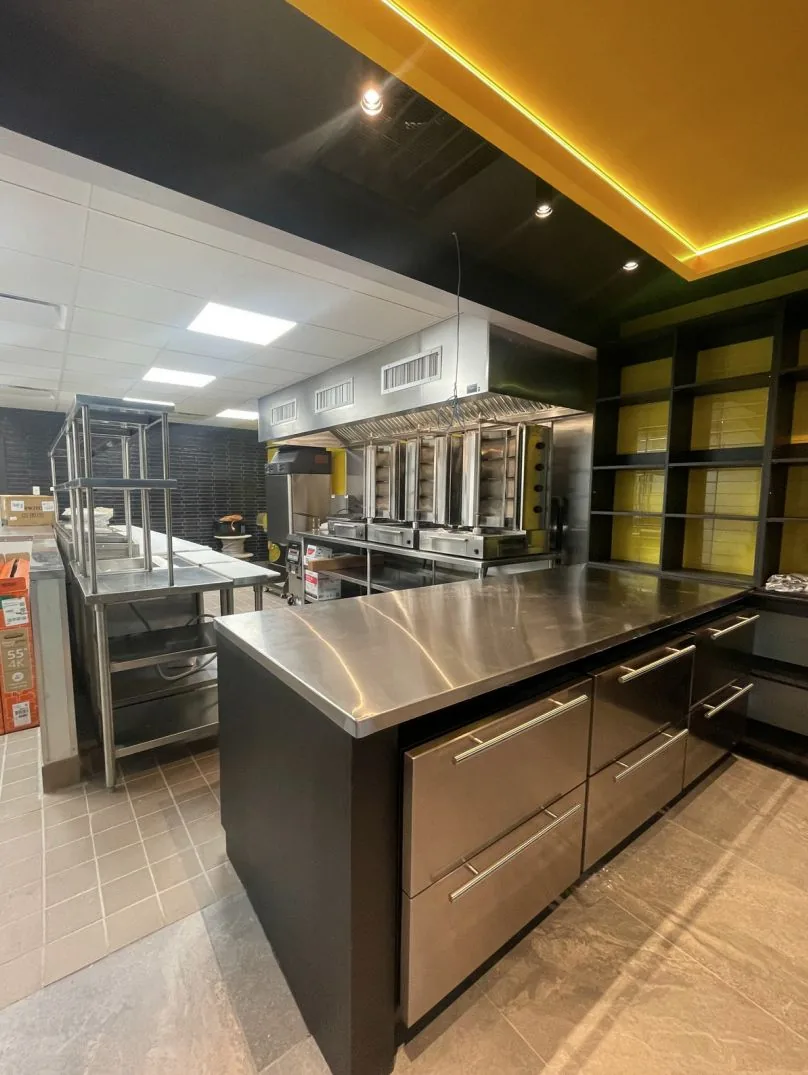
The rotisserie defines döner, but it does not run alone. Refrigeration protects raw product and prepared vegetables. A hand sink and warewashing support hygiene. Ventilation deals with heat and grease. Separate utensils and work zones help keep the raw stack away from ready-to-eat salad and sauce. A fryer or press is optional, depending on the menu.
Outer layer Ready first
Only the properly cooked face is carved; the center keeps heating.
Separate Raw and ready-to-eat
Salad, bread, and sauces must be protected from the raw interior and its utensils.
Documented Time and temperature
Cooking, hot holding, cooling, and reheating controls follow the product and local code.
What the customer can observe
A customer cannot audit a food-safety plan from the queue, but a few questions are reasonable. Is the cook carving only browned meat? Is cooked meat held hot rather than sitting lukewarm? Are tongs for raw work kept away from bread and salad? Can staff provide current allergen information?
The spectacle of a turning cone draws attention to the front of the machine. The harder work happens around it: sourcing a correctly labeled product, keeping it cold before cooking, reaching safe temperatures, protecting ready-to-eat ingredients, and handling leftovers within an approved process. The spit is the visual center, not the whole kitchen.
Slice stacks, minced stacks, and regional habits
Turkish cooks distinguish yaprak döner — layered slices — from kıyma döner, built with minced meat. National Geographic’s 2024 feature uses those words for London Turkish kitchens that still stack in-house; the same distinction sits inside Germany’s minced-meat allowance. A slice stack can be dry. A minced cone can be carefully seasoned and cooked. Watch the carved face. “Whole muscle” is a slogan.
Mary Işın’s account of nineteenth-century Istanbul restaurants turning the spit upright, summarized in Istanbul and Turkey, is why this machine predates Berlin. Horizontal relatives such as cağ kebabı still exist. Shawarma and gyros share the upright idea and then diverge in seasoning and meat, as the comparison chapter lays out.
Operator cones differ too. GDK’s UK allergen page states: “Our beef doner contains poultry for added juiciness.” Döner Haus’s public site describes its meats as filler-free. Neither sentence describes a Kreuzberg window that stacks its own lamb. How to judge a shop is the diner’s version of this chapter: watch the carve, then eat.