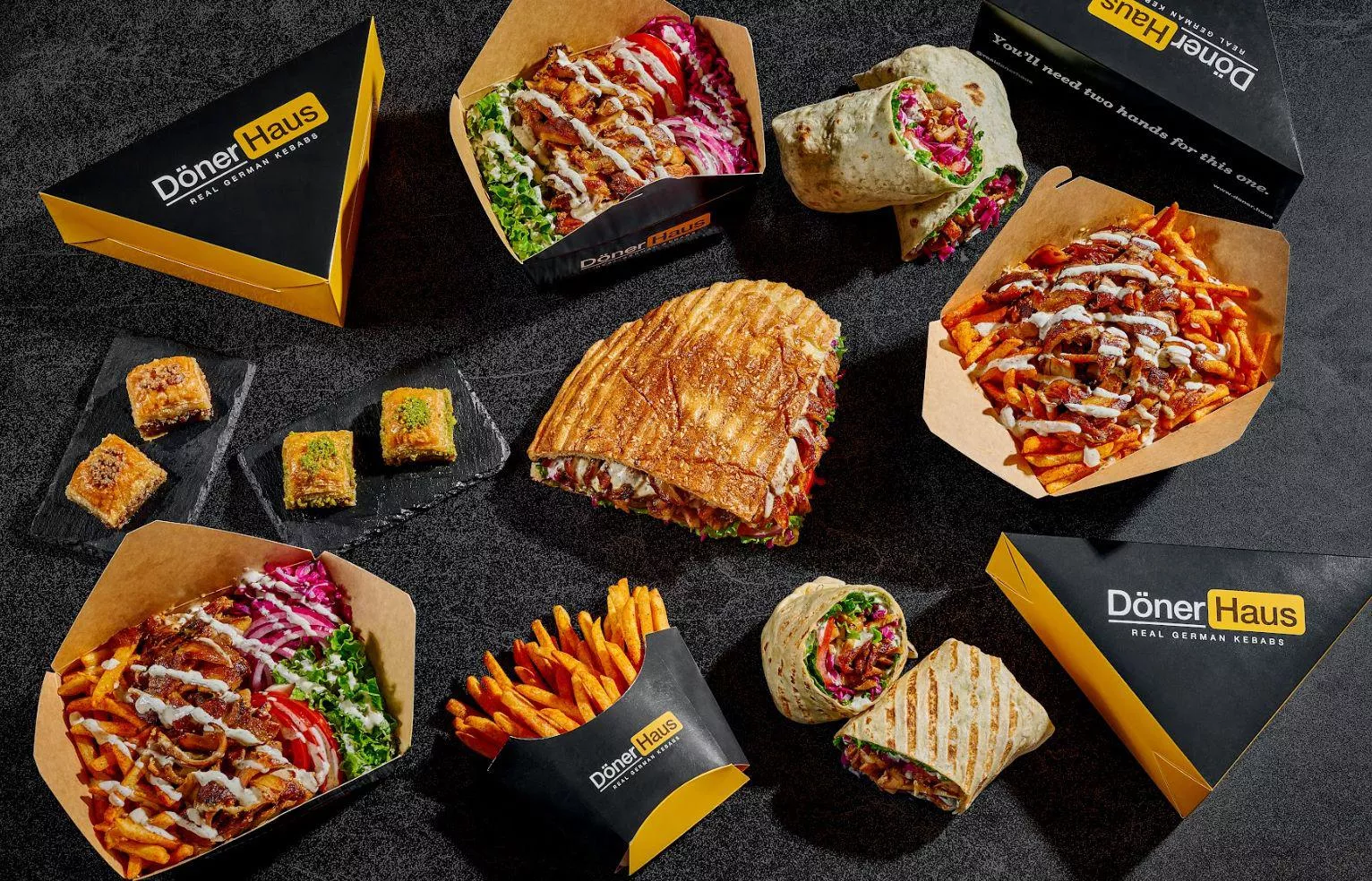
Sauce is one of the clearest signs that döner is a living family rather than a standardized sandwich.
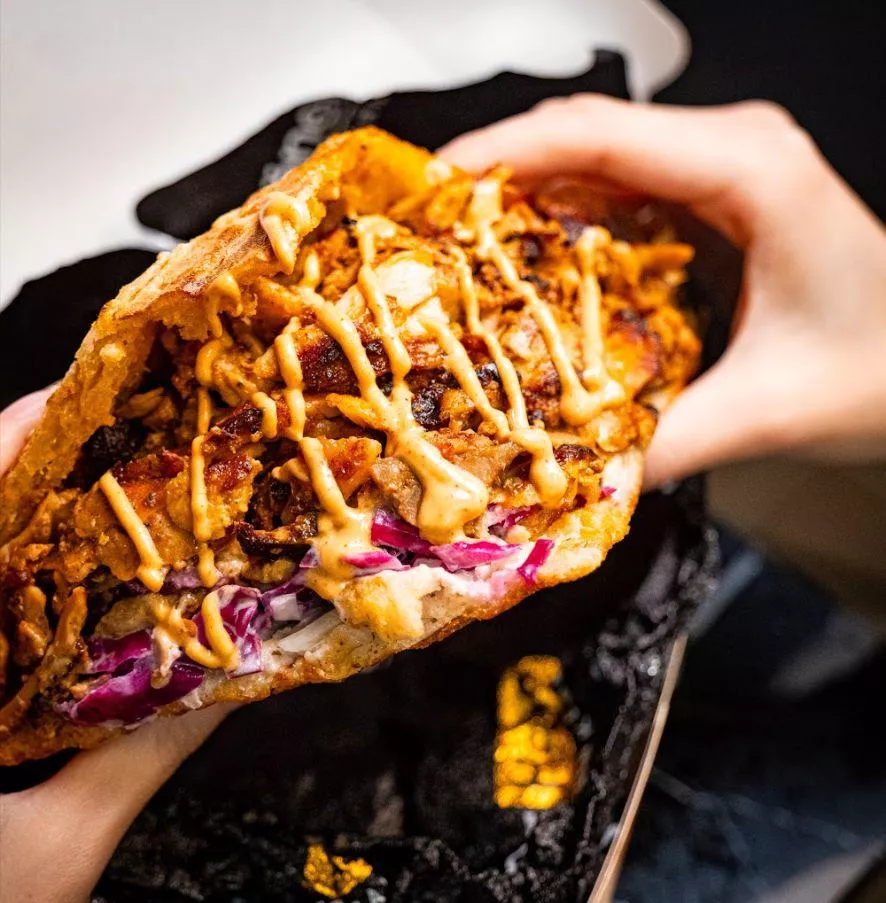
Berlin’s city guide describes three familiar choices: garlic, herb, and hot sauce. Many counters ask Welche Soße? and allow one or a combination. Yet “three sauces” does not specify a recipe. A garlic sauce may be yogurt-based, mayonnaise-like, or dairy-free. Herb sauce can be pale or green. Scharf might mean a liquid chile sauce, chile flakes, or both.
Berlin conventions, not Berlin law
The city of Berlin’s current guide pairs the familiar sauce trio with a broad salad set — what a visitor often encounters, without a standard enforced across the city. Shops known for vegetable kebap, vegan döner, Kurdish or Turkish regional cooking, or newer chef-led versions use different sauces.
The choice also interacts with the meat. A mild veal döner can carry garlic and herbs differently from heavily seasoned chicken. Roasted vegetables may come with feta, lemon, or a lighter herb sauce. A dürüm has less absorbent bread than a deep pocket, so the same amount of sauce can leak.
Three related traditions
Similar colors, different sauces
The Berlin trio
Garlic, herb, and hot sauce are common counter choices. Their bases and recipes vary, so allergens cannot be inferred from the name.
Classic
Greek tzatziki
Cucumber and yogurt are defining features. It is strongly associated with gyros, but food traditions overlap and a döner shop can still serve it.
Cool, yogurt-and-cucumber
Levantine toum and tahini
Toum is a garlic-and-oil emulsion; tahini is sesame-based. Both are common with shawarma and can also appear beside falafel or other foods.
Garlic or sesame-led
Compare documented menus
Current operator pages make the variation concrete. Döner Haus’s East Village menu describes a creamy garlic sauce and lists a separate spicy sauce — the Berlin counter question, asked in English. Kotti’s New York menu says orders include red and white sauces. GDK’s OG Kebab page describes three signature sauces on waffle bread. Three sauces on a UK loaf is still a UK loaf.
The same care applies to neighboring cuisines. Britannica’s shawarma entry notes hummus and tahini as common and contrasts them with tzatziki commonly served with gyros. That distinction is helpful at a high level, but Levantine shawarma itself varies by meat and place. Chicken commonly meets toum, a garlic emulsion; beef may meet tahini. A restaurant can cross those conventions without changing the history of the dish.
Heat is a separate choice
German counter shorthand often treats scharf as an opt-in finish. It may be spooned sauce or a dry chile sprinkle. Ask ein bisschen scharf for a little, or nicht scharf for none. The word describes chile heat, not how strongly the meat is seasoned.
“Habanero,” “chili,” and “hot sauce” do not communicate a comparable heat level across shops. Neither does color. A red sauce may be tomato-forward and mild; a pale sauce may contain a very hot pepper. Staff at the specific location are the source for what is served that day.
Allergens and vegan claims
Creamy does not automatically mean dairy. Toum gets its texture from emulsified garlic and oil and is typically vegan. Tahini contains sesame. Tzatziki contains dairy. Mayonnaise-style sauces may contain egg. Yogurt-garlic contains dairy, while a commercial white sauce can contain several of these bases.
The bread, meat, and sauce also share a preparation line. GDK’s current US allergen information warns that it cannot guarantee allergen-free food because of ingredients and cross-contact. That is an operator’s statement about its own kitchens. Ask about the named item and location rather than relying on “white sauce.”
For a vegan order, ask about the protein, bread, sauce, cheese, and fryer individually. For a sesame allergy, remember both tahini and seeded bread. For milk or egg allergies, do not infer a sauce base by taste or appearance.
Sauce carries the sandwich; it cannot certify it
Britannica’s shawarma entry remains the high-level contrast with tahini and toum; it does not freeze every Levantine shop any more than berlin.de freezes every Kreuzberg window.
Sauce carries moisture, acidity, fat, herbs, garlic, and heat through a sandwich with many dry and crisp elements. It can balance rich meat and bitter cabbage or bind a box of fries and salad. Authenticity, halal status, gluten content, and meat quality need their own evidence.
Regional boards, vegan tahini, and drinks that are not sauce
Herb sauce is more characteristic of some German counters than of a Bursa İskender, which uses tomato sauce and butter rather than a cabbage-pocket garlic line. Yogurt appears in both countries and still does not mean the same recipe. DonerG names a house sauce and a red spicy sauce on its fladenbrot item — Turkish-American labels, not Berlin’s Kräuter. Vöner, on Berlin’s city guide, uses tahini-garlic and chile-tomato with seitan: sesame in a vegan register.
Ayran is a yogurt drink, not a sauce; see drinks. Extra sauce on fries is a sides problem as much as a sandwich problem. If you need the German counter words — Welche Soße?, ein bisschen scharf — they live in how to order and the glossary.
The Explainer’s short version is what sauces go on döner?. The longer map is here: Berlin trio as convention, operator sets as examples, neighboring cuisines as cousins, allergens as a separate sheet.