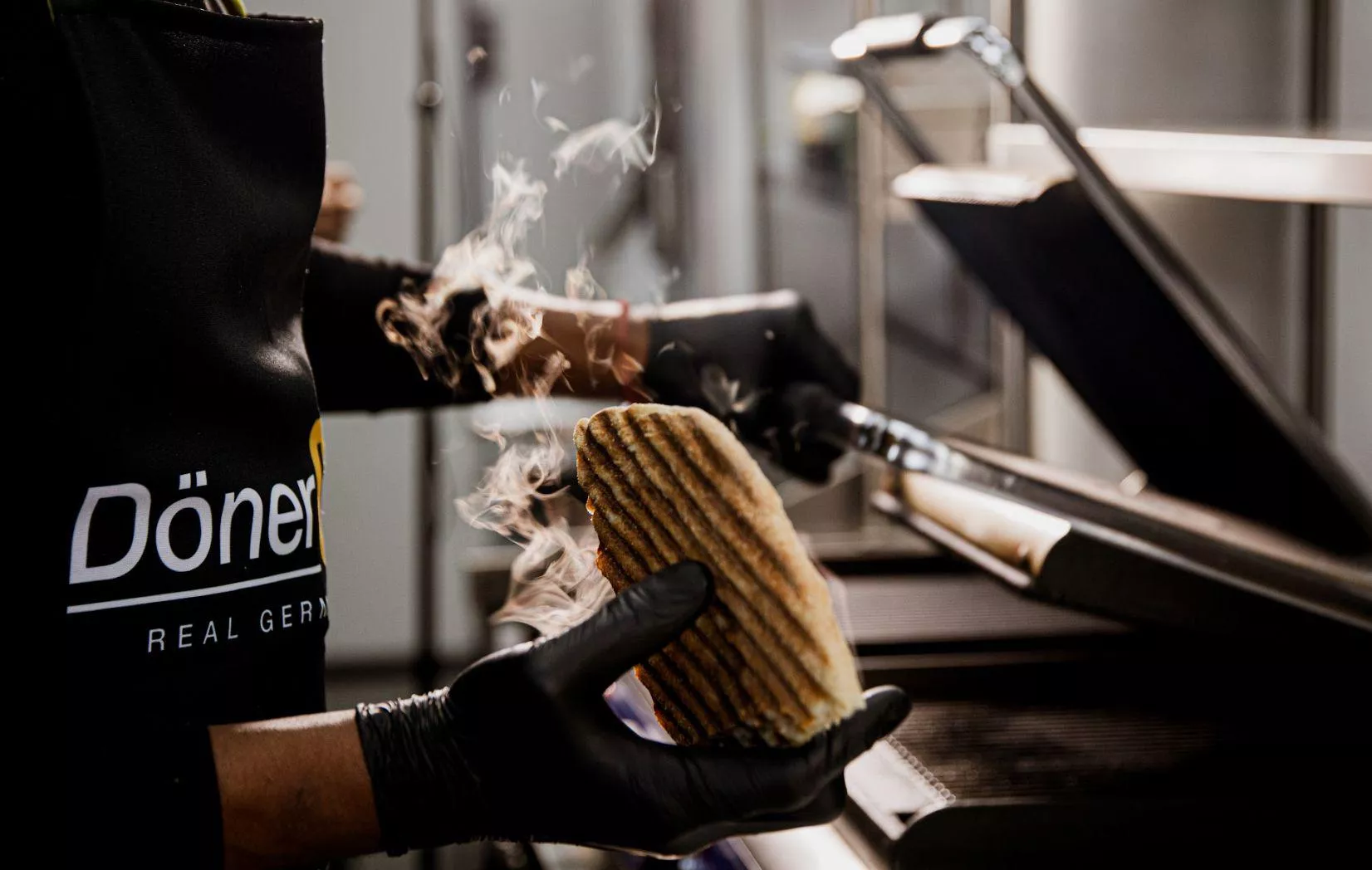
A dürüm is a rolled döner: shaved meat, vegetables, and sauce wrapped in a thin flatbread instead of packed into a cut loaf. Berlin’s city guide treats it as the same filling family as the sandwich, distinguished by the carrier. It is not automatically lighter, spicier, or more “Turkish” than the bread pocket beside it on the board.
The useful comparison is structural. A quartered pide or Fladenbrot sandwich opens as a pocket or wedge. A dürüm is a cylinder. A döner box or Dönerteller abandons the wrap and puts the same components in a container or on a plate. Many shops sell all three from one spit.
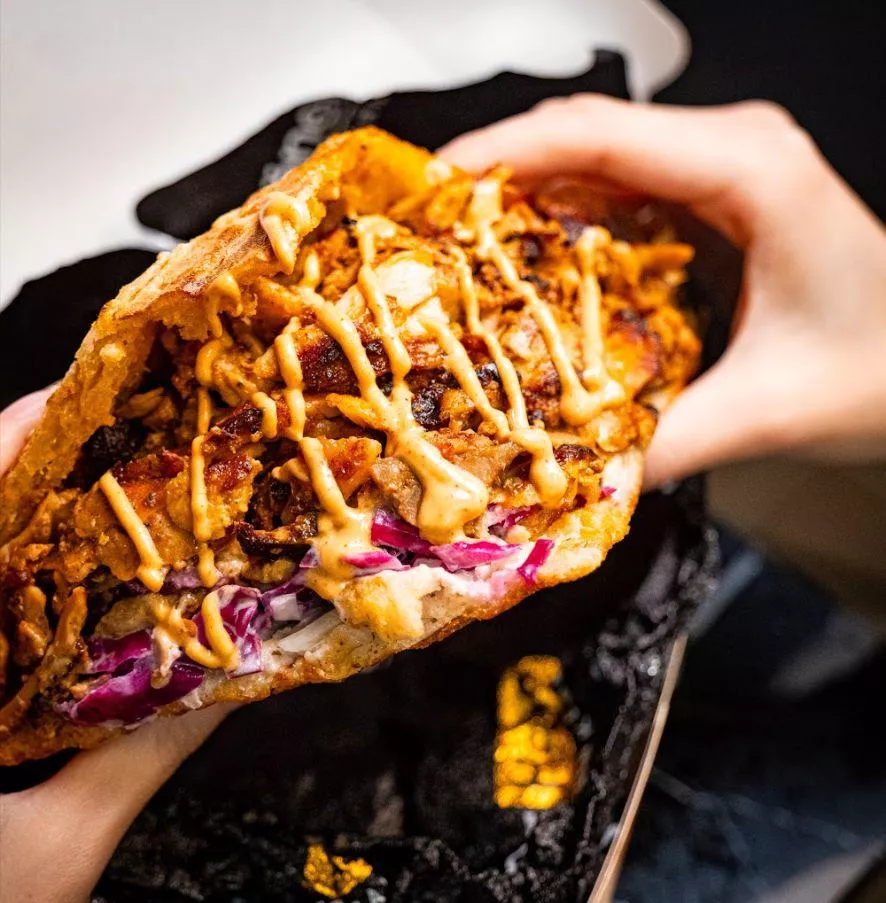
Three ways to carry the same spit
| Format | Typical bread | How it is eaten | What it changes |
|---|---|---|---|
| Pide / Fladenbrot sandwich | Quartered round or oval wheat loaf, often warmed or pressed | Two hands; the pocket contains the salad | Crust and crumb absorb sauce; the bottom can collect liquid |
| Dürüm | Thin wheat sheet — yufka-like bread, lavash, or another wrap | One or two hands; eaten from the open end | Fillings are distributed along the roll; steam softens the sheet in closed paper |
| Box, bowl, or plate | Optional bread on the side | Fork; sometimes a knife | Portability and starch change; wheat may still be in meat, sauce, or a shared fryer |
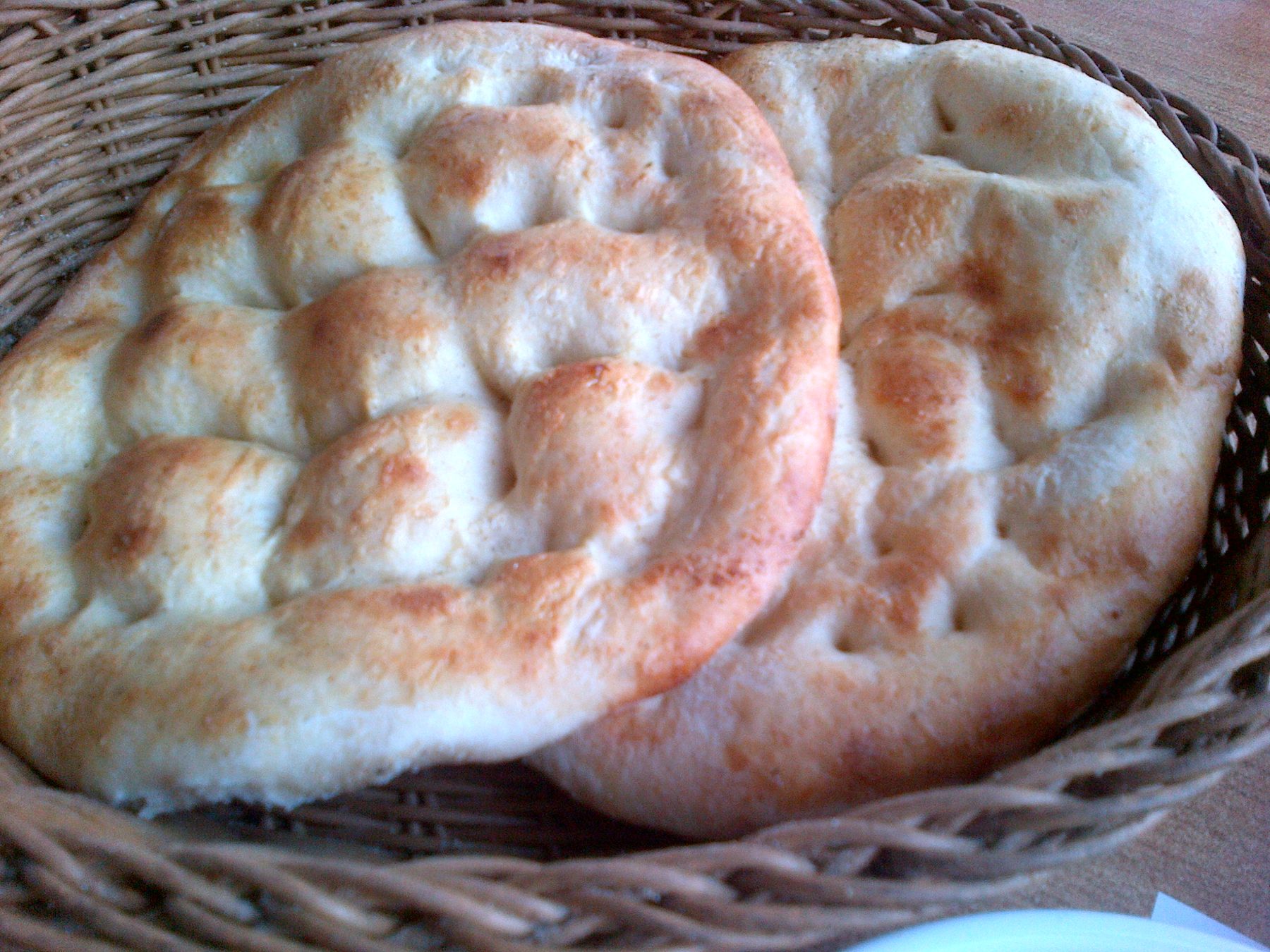
Berlin’s current city guide uses “pita” for the classic sandwich and dürüm or dürüm döner for the wrapped form. That translation is broader than the English habit of treating “pide” and “pita” as enemies. The physical build is clearer than the label: a thick cut loaf versus a thin roll.
Names overlap further. Yufka is a thin unleavened sheet used for rolled döner in many German shops, especially in the south. Rollo appears on some northern boards for a similar idea. English menus say wrap. A US operator may grill a flour tortilla. None of those words guarantees bakery origin, thickness, or sesame.
What current menus actually wrap
Döner Haus’s current East Village menu describes a crispy Turkish pide pocket for the sandwich and a separate wrap. German Doner Kebab’s current OG Kebab is built on toasted sesame waffle bread; its US directory also lists a flatbread Doner Wrap with lettuce, tomato, onion, red cabbage, and three sauces. Kotti’s current menu groups sandwiches, bowls, and wraps around the same proteins and sauces.
Those pages show a pattern, not a rule. One spit can supply a pocket, a roll, and a bowl. Bread is the variable the customer chooses most often after meat.
California operator DonerG positions itself as Turkish döner rather than a Berlin sandwich shop and lists pita sandwiches, an “Original Fladenbrot,” bowls, and wraps on its public site. That is useful because it keeps the Turkish plate-and-wrap tradition visible beside the German pocket. A dürüm in Berlin and a wrap in Orange County can share a method while differing in bread, pickles, fries-in-the-bread, and sauce.

Why the roll feels different
Thin bread changes heat and moisture. A dürüm is often grilled or pressed after rolling, which marks the outside and warms the interior. Sauce spreads along the length instead of pooling in a pocket. Cabbage and onion stay in the bite rather than falling out the open end of a wedge. Closed packaging, though, traps steam: a dürüm that left the counter crisp can arrive soft.
A pide sandwich offers a toasted face and a salad cavity. It is messier at the bottom and sturdier at the crust. A box solves neither problem; it solves the fork-and-lid problem. Choosing among them is a service decision — walking, sitting, sharing, avoiding bread.
In Turkey, rolled and plated döner are ordinary. Food historian Mary Işın, writing on Ottoman kebab, describes horizontal spits giving way to vertical ones in nineteenth-century Istanbul restaurants; the Berlin salad-and-sauce pocket is a later German-Turkish occasion. A dürüm can sit closer to some Turkish street wraps without being a replica of Bursa İskender, which is sliced meat over pide with tomato sauce and butter, eaten with a knife and fork.
How to order the rolled form
In Germany, einen Dürüm, bitte is usually enough. If the board says Yufka or Rollo, use that word. Ask Was für ein Brot ist das? if the sheet matters. For takeaway, zum Mitnehmen still applies. Sauce and heat questions are the same as for the sandwich: mit Knoblauch, mit Kräuter, scharf? See how to order for the full counter sequence.
If the goal is less bread, check what the wrap weighs. A large dürüm can hold as much meat and sauce as a sandwich. If the goal is avoiding wheat, a wrap is the wrong shortcut: conventional dürüm bread contains wheat, and meat formulations can contain it too. GDK’s current allergen guidance warns that gluten is used in its kitchens and that cross-contact prevents an allergen-free guarantee. That statement is about GDK, but the cautious question is portable: what bread, what meat, what sauce, what grill.
A roll is still a format
A rolled döner is not automatically:
- halal — certification is independent of the wrap;
- gluten-free — the sheet is usually wheat;
- lighter — meat and sauce dominate energy more than bread shape;
- the “real Turkish” version — Turkey serves plates, pide, wraps, and regional specialties;
- a Berlin invention — rolling meat in thin bread is older and wider than the 1970s sandwich story.
It is a format. Read the board, look at the bread, and check the questions that actually change the meal.
Related chapters
Common questions
- What is a dürüm?
- A dürüm is döner meat, vegetables, and sauce rolled in a thin flatbread rather than stuffed into a cut loaf.
- Is dürüm the same as a wrap or yufka?
- Shops use the words overlappingly. Dürüm names the rolled build; yufka names a thin bread; wrap is the English menu word. Ask what bread is actually used.
- Does a dürüm use less bread than a sandwich?
- Often the sheet is thinner, but it can be large. Weight and wheat content still need a specific item check.