Judge the food: the spit, the bread, the vegetables, and how the people behind the counter handle a question. Floor space, branding, and whether the room matches a photograph from Berlin do not settle it. Then eat.
Neighborhood and chain rankings sit outside this checklist.
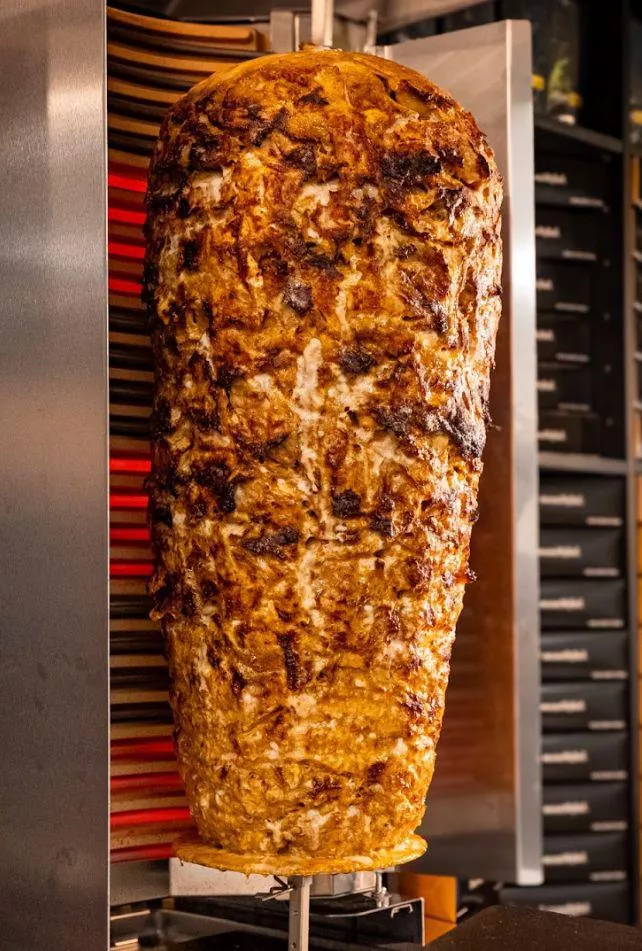
A diner’s checklist
Use this at the counter. The list is for looking, not for arguing with staff.
| Look at | Encouraging signs | Warning signs |
|---|---|---|
| The spit | Outer surface browned; cook shaves thin cooked meat; cone matches the day’s demand | Grey dried crust; thick cuts into a raw interior; a huge pre-cut pile sitting lukewarm |
| Bread | Loaf warmed or toasted to order; crumb still flexible | Hard leftover quarters, cold center, or a soaked bottom before you leave the shop |
| Vegetables | Cut, bright cabbage and tomato; bins replenished | Brown lettuce, watery tomato, or cabbage that smells tired |
| Sauce | Named options; staff can say dairy/egg/heat in plain language | “White sauce” as the only answer to an allergy question |
| Service | Order repeated back; heat and salad questions asked | Chaos that produces the wrong meat, or pressure to take food after the spit is done |
| Queue | Movement; people leaving with food that looks like the board | A line that does not move, or a crowd that is only photographing the neon |
None of these replaces a health inspection. A customer cannot audit cooling logs from the sidewalk. The spit chapter explains why time, temperature, and the raw/cooked boundary matter even when the machine looks theatrical.
Spit care is the whole method
Döner is cooked on the outside and carved. If the cook is taking pale, thick slices from deep in the stack, the method has failed for that portion. If carved meat sits in a heap long enough to dry or cool, the advantage of slicing to order is gone.
A small cone near closing can be better than a large cone nobody is eating. Late at night the same rules apply; see late night. A glowing element is not a thermometer.
Germany’s composition guidelines tell you what the name Döner Kebab is supposed to mean in that country. They do not grade a sandwich. A correctly labeled product can still be overcooked. A Drehspieß product can still be handled well. Ask what is on the spit if the board is vague.
Bread and vegetables are freshness tests
Bread should be able to hold meat and sauce without tasting like yesterday’s leftover. Toasting helps; it cannot rescue a stale loaf. A dürüm sheet should flex, not crack into shards or dissolve into paste.
Vegetables are the Berlin sandwich’s public claim. The city’s guide lists cucumber, onion, tomato, two cabbages, and lettuce as familiar options. If those bins look like they were cut this morning, that is information. If the only red thing is sauce, that is also information. Roasted-vegetable shops are a different build; judge them on whether the vegetables are actually roasted and hot, not on whether they match a cabbage checklist.
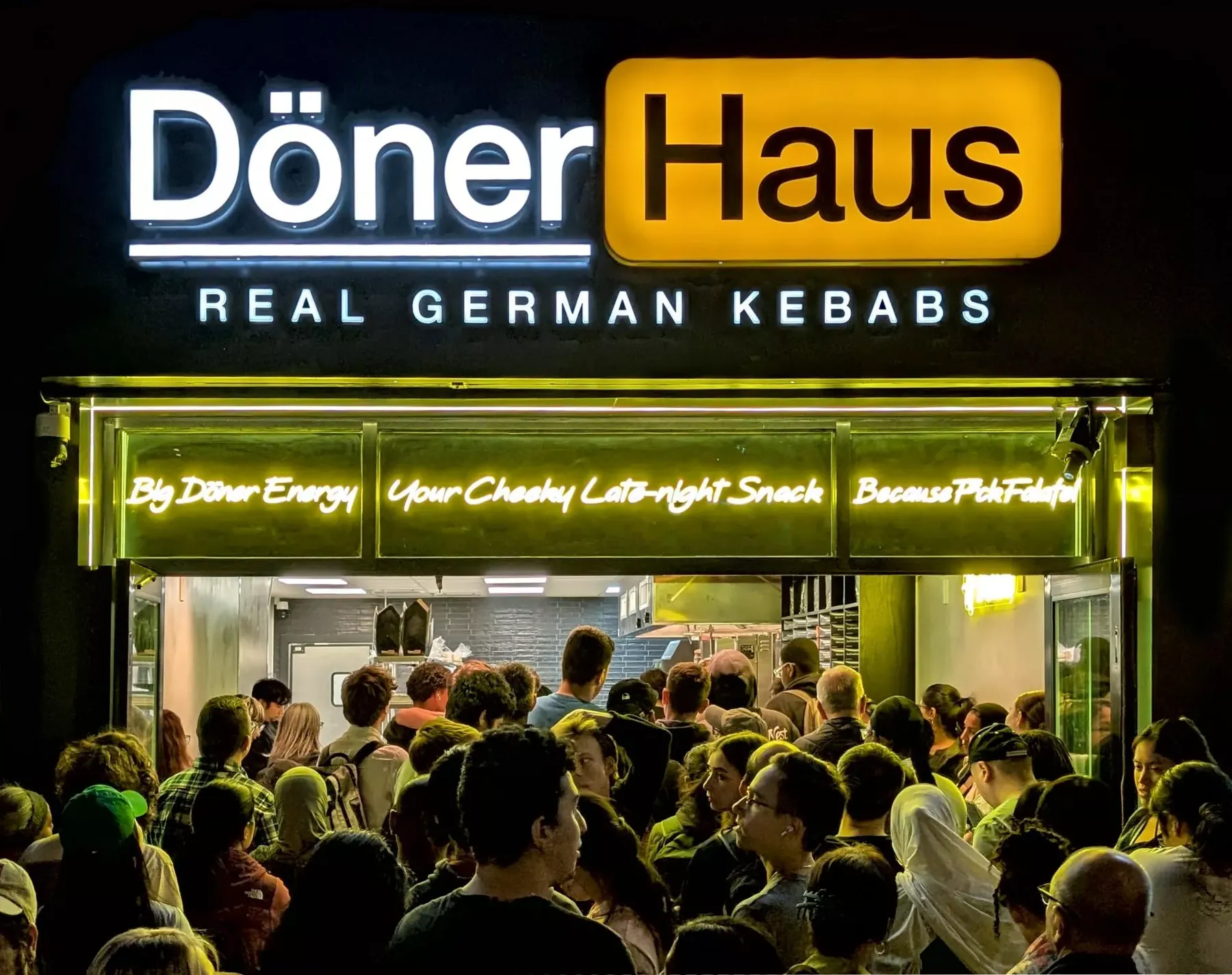
What a queue can and cannot tell you
Mustafa’s Gemüse Kebap publishes its Kreuzberg address and notes a frequent wait at Mehringdamm — a to-go stand whose line is part of the public fact of the shop. A wait there means demand. Other Berlin shops need not be judged by the same crowd, and a quiet Wedding dining room can still serve good food.
US examples are the same kind of evidence. A lunch line at a New York counter and an empty mall unit at 3 p.m. measure foot traffic. They do not measure marinade. Kotti, GDK, and Döner Haus publish different service settings — food halls, malls, street windows — on their own sites. Format is not quality.
Questions that are fair, and questions that are not
Fair: What meat is that? Is it halal-certified, and by whom? Does the garlic sauce contain milk or egg? Is the fryer shared? When was the bread baked or toasted? Mit allem includes onion?
Useless as a quality test: How many square feet is the shop? Who is the supplier? What is the royalty rate? Those questions belong to operators, not to dinner.
Also not a test: English on the menu, a neon sign, a “Berlin” in the name, or a photograph of a spit on the window. German döner in the US uses Berlin as positioning.
After the first bite
Cabbage should still have crunch. Meat should taste roasted, not only salty. Sauce should be chosen, not drowned. A dürüm should hold until the last third. If you wanted heat, scharf should be detectable. If you asked for no onion, there should be no onion.
One sandwich is a sample of that shop, not a city’s reputation. The next shop can reverse it.
Related chapters
Common questions
- What should I look for in a good döner shop?
- Meat carved from a properly browned spit, bread that is fresh or well warmed, vegetables that look recently cut, and a counter that can answer sauce and allergen questions.
- Does a long queue mean the döner is good?
- A queue shows demand at that hour. It does not prove meat quality, and an empty shop at 3 p.m. is not a verdict either.