Almost every döner shop with an oven sells lahmacun, and almost every English menu describes it wrongly. It is the most commonly mistranslated item in the whole Turkish takeaway repertoire, and the mistranslation hides a dish with a completely different technique, region and eating method from the sandwich next to it on the board.
This chapter is about that difference, and about why the word “pizza” keeps being attached to it.
What it actually is
Lahmacun is dough rolled very thin, spread with a finely minced meat mixture worked together with pepper, onion, tomato or pepper paste and spices, then baked for a short time in a very hot oven. The name comes from Arabic — laḥm bi-ʿajīn, meat with dough — which describes the dish more accurately than any European comparison.
Three structural facts matter more than any recipe:
- The topping is a paste, not a pile. The meat is minced fine and spread in a thin layer, so it cooks through in the same minute the dough does.
- There is no cheese and no tomato sauce in the classic version, and no attempt at a molten layer. What browns is meat and dough.
- It is eaten rolled. Parsley, raw onion and a squeeze of lemon go on top, and the round is rolled into a cylinder and eaten in the hand. It is not cut into wedges.
The last point is the one visitors get wrong most often, and it explains the flatbread’s thinness. A round that has to fold has to be pliable; a round that has to hold a wet cheese layer has to be sturdy. Those are two different breads for two different jobs — the same logic that runs through bread.
The heartland and, since 2025, the paperwork
Lahmacun’s home is southeastern Türkiye, around Gaziantep and Şanlıurfa, in the pepper-and-stone-oven belt.
That regional attachment now has legal weight. Anadolu Agency reported on 5 November 2025 that the European Union registered Gaziantep’s lahmacun as a protected geographical indication (PGI), the city’s fifth EU-recognised product after Gaziantep baklava, Araban garlic, menengiç coffee and Antep pistachio paste. Reviewed in August 2026, that report also carries the mayor’s framing of why cities pursue these registrations: they “preserve the authenticity of our traditional flavors while showcasing our brand value on the global stage.”
Note what that registration does and does not do. It protects Gaziantep lahmacun as a name tied to a place and a method. It does not make lahmacun sold anywhere else illegitimate, and it does not standardise the dish across Europe. Compare the failed attempt to register Döner itself as a Traditional Speciality Guaranteed, described in döner across Europe: a name attached to a place is a far easier thing to register than a name attached to a technique that four countries have already adapted.
Why it lives on a döner menu
Lahmacun and döner are not variations on each other. They are two products that happen to suit the same shop, for reasons that are entirely about equipment and labour.
| Döner | Lahmacun | |
|---|---|---|
| Station | Vertical spit, running continuously | Very hot oven, used in bursts |
| Prep | Stack built hours or a day ahead | Dough and meat paste prepared, assembled to order |
| Service speed | As fast as a cook can carve | As fast as the oven bakes, which is minutes |
| Garnish | Salad, cabbage, sauces | Parsley, onion, lemon |
| Failure mode | Carving into undercooked meat | Dough dried out or topping too wet |
The overlap is the garnish shelf and the customer. A shop already prepping onion, parsley, tomato and lemon for its sandwiches can garnish lahmacun from the same containers, which is why the two items so often share a counter — and why the vegetable side of the operation matters to both.
The two also cover different parts of the day and different appetites: a spit is a commitment to volume, an oven is not. A shop that sells lahmacun is filling gaps in demand that the spit cannot fill economically, which is the same reasoning behind the fryer and the side menu.
Why English menus say “pizza”
The nickname is a translation habit: people describe unfamiliar food in terms of something they already know.
The food writer Susan Jung set that mechanism out in the South China Morning Post in April 2015, in a column that opens with a plea not to call lahmacun Turkish pizza. Her point is that the only thing the two share is being a baked flatbread with a topping, and that people reach for “pizza” because they are “attempting to put lahmacun into a familiar context.” She then gives the parallel cases: her grandmother calling tamales “Mexican zongzi,” Chinese restaurants in California listing zongzi as “Chinese rice tamales,” a British chef seeing fried dough sticks in congee and asking about doughnuts. Her working rule is to describe a thing as what it is rather than as a foreign version of something else — doenjang as “Korean fermented soybean paste,” not “Korean miso.”
That is exactly the discipline the döner, gyro and shawarma chapter tries to apply, where the same shortcut produces the same distortion: three related but distinct traditions flattened into “the Greek one” and “the Turkish one.”
The practical cost of “Turkish pizza” is wrong expectations. A customer who orders it expecting cheese, a sliced round and a knife and fork gets a thin, rolled, lemon-sharpened meat flatbread and concludes the shop made a bad pizza.
Pide is not lahmacun either
The second layer of confusion is that “Turkish pizza” also gets applied to pide, which is a different thing again — and, in Germany, the word for something different a third time.
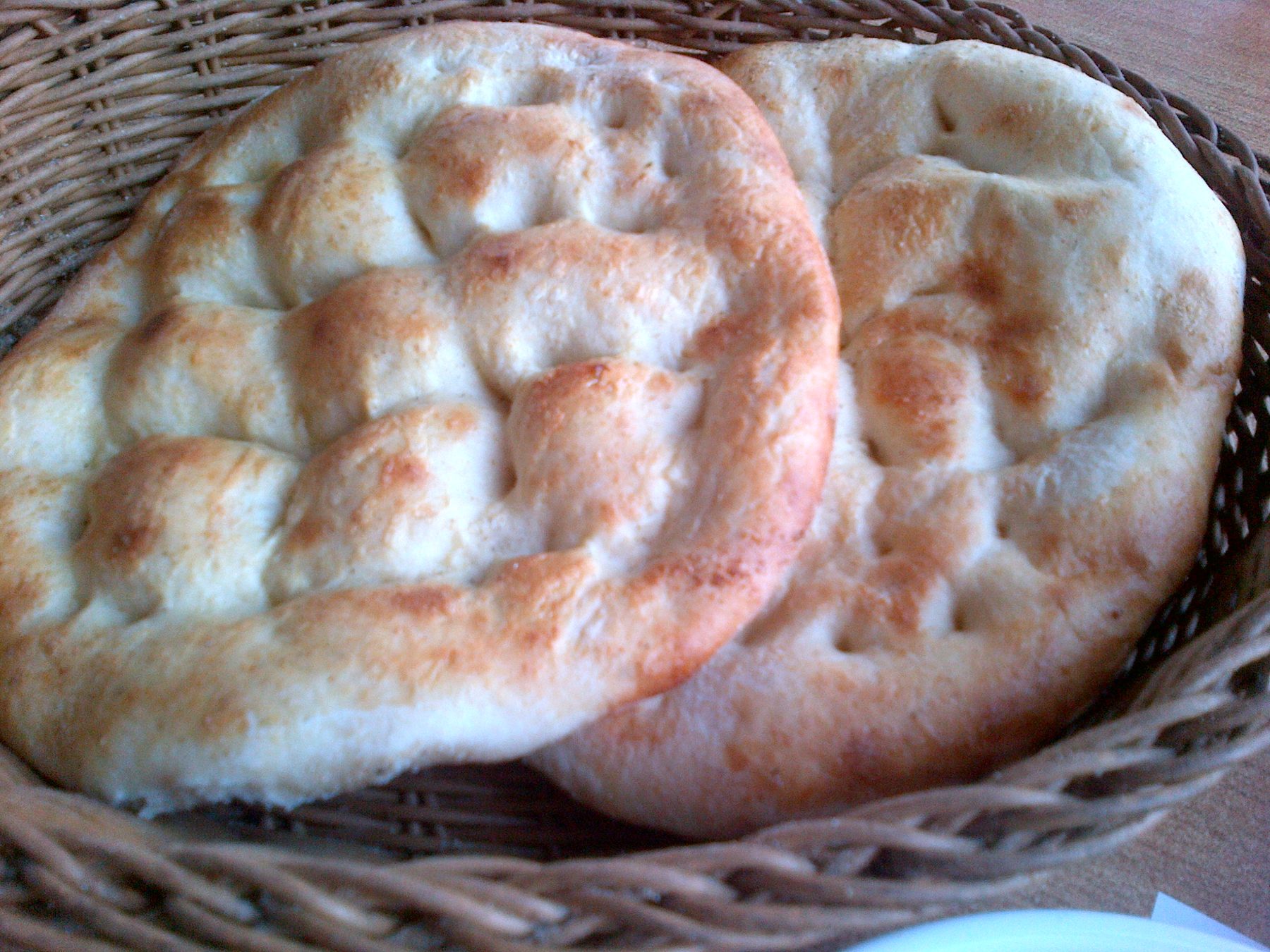

So a board can carry three items an English speaker might call Turkish pizza: lahmacun, a topped pide, and a döner served in pide bread. Bread covers how the word travels between a bakery product and a menu category, and the glossary is where the counter vocabulary stays straight.
How to order it and what to expect
A lahmacun arrives flat, often two or three to a plate in Türkiye, and comes with a bowl of parsley, sliced onion and lemon wedges. The convention is to dress it, roll it, and eat it immediately, before the dough loses its flexibility — which is also why it does not travel well, in contrast to a wrapped dürüm.
Ayran is the standard drink with it, as it is with kebab generally; see drinks. Where lahmacun turns up in northern European shops it is frequently rolled around salad and sauces in the local style, sometimes with meat added — which makes it a carrier rather than a dish, and puts it in the same category of adaptation as the kapsalon or the French tacos.
For anyone reading ingredients rather than romance: this is a wheat-dough item with a meat topping and no dairy in the classic build, but that says nothing about a specific shop’s dough, paste or garnish. The allergen questions in allergens apply here exactly as they do to a sandwich.
Related chapters
Common questions
- What is lahmacun?
- A very thin round of dough spread with finely minced meat, pepper, onion and tomato, baked briefly in a very hot oven, and usually eaten rolled with parsley, onion and lemon.
- Is lahmacun Turkish pizza?
- No. Classic lahmacun has no cheese and no tomato sauce, the dough is far thinner, and it is rolled rather than sliced. The nickname is a translation habit, not a description.