The short answers
Everything people actually ask
The long chapters cover the history and the mechanics. The one-line versions sit below.
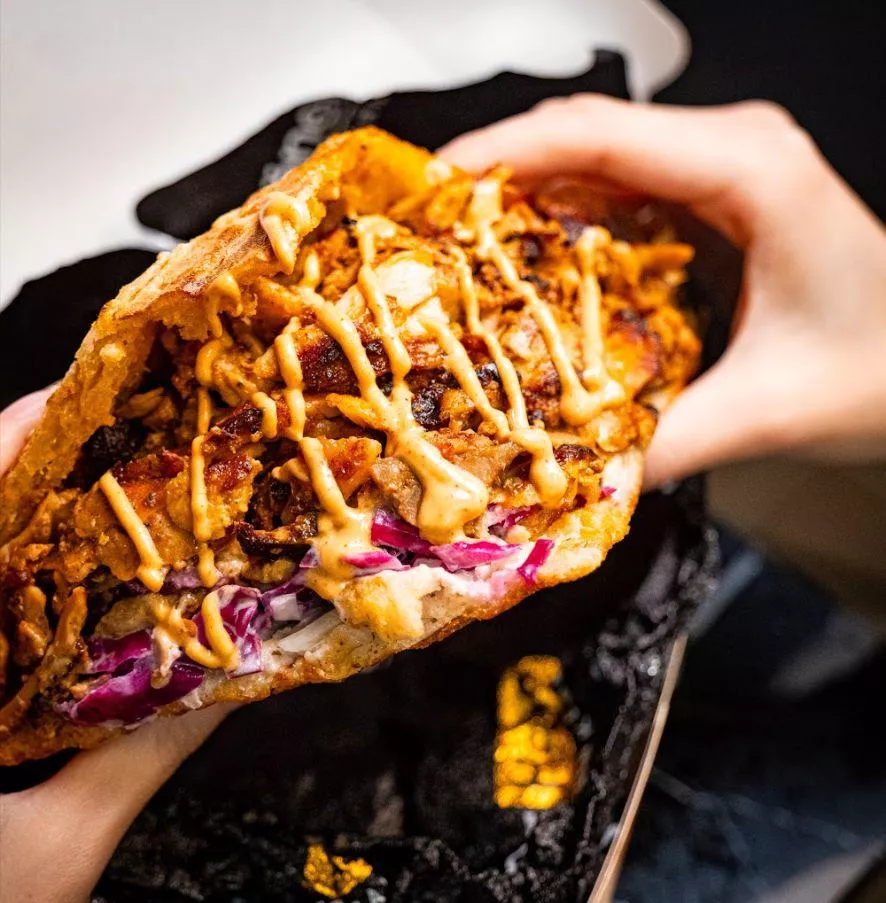
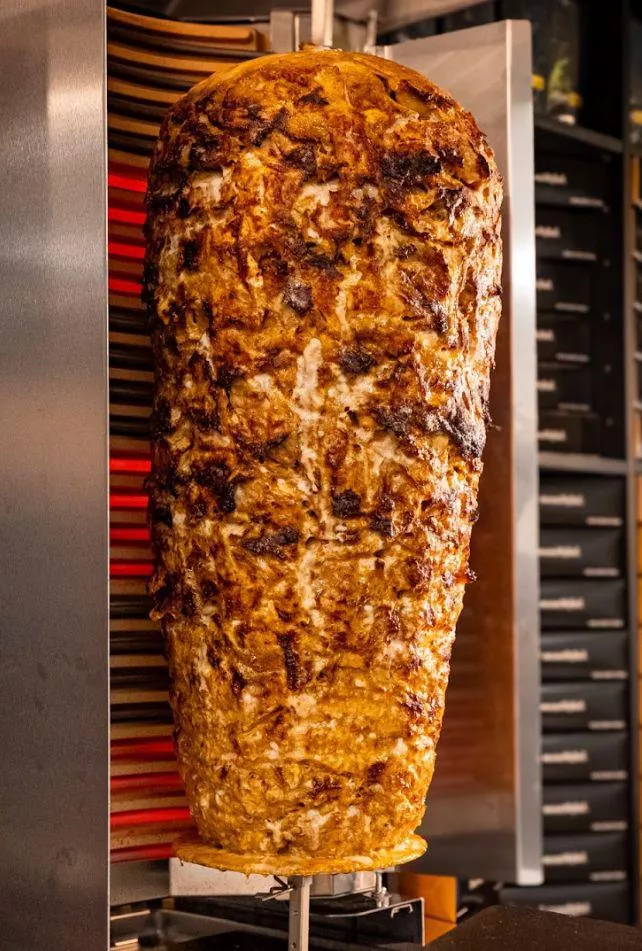
What does döner mean? It comes from the Turkish verb dönmek, to turn, referring to meat cooked on a rotating spit.
Is a German döner the same as a Turkish döner? It grows from Turkish döner. The bread sandwich with salad and sauce became associated with West Berlin in the early 1970s, but recipes vary in both Germany and Turkey.
What kind of meat is used? Beef, veal, lamb, and chicken all appear. Germany’s official guidelines distinguish döner composition from more heavily minced or differently formulated Drehspieß products.
Is döner considered healthy? No single answer covers the category. Serving weight, meat, bread, sauce, cheese, vegetables, and sides all change the numbers. Calories and nutrition explains why one shop’s figure is not another shop’s.
Is it the same as a gyro? No. Greek gyros commonly uses pork or chicken, oregano, soft pita, tomato, onion, tzatziki, and sometimes fries. German döner commonly uses other bread and a broader salad layer, but both vary.
Is it shawarma? No. Shawarma is an Arab branch of the same wider rotisserie family and often uses warm spices, pickles, toum, or tahini with thin bread. Those are tendencies, not immutable recipes.
Which came first? Upright döner is documented in the nineteenth-century Ottoman world. Shawarma and gyros developed from the wider rotisserie tradition; Berlin’s sandwich became prominent in the early 1970s.
Are they all made the same way? They share rotating heat and surface carving. Stack composition, meat, seasoning, food-safety controls, bread, vegetables, and sauces differ.
Is it halal? It can be. Ask for the named certifier, the current certificate, and whether it covers the product, manufacturer, line, or restaurant. As of the latest public owner reply, Kotti’s chicken is not certified halal; its menu also sells beer and wine. Halal status does not establish gluten-free, organic, or additive-free.
Is the meat gluten-free? Only if the exact formulation is. A bread-free box can still contain wheat in meat or sauce and pick up crumbs from counters, knives, or fryers. Ask the location.
What bread is it served on? Quartered fladenbrot or pide-style bread is common; dürüm uses a thin rolled bread. Current operators also use custom pressed pockets and sesame waffle bread. There is no single loaf.
What sauces? Garlic, herb, and hot sauce are familiar Berlin choices. Current US operators document red and white sauces, garlic and spicy sauces, or three branded sauces. Ask about allergens.
What is a döner box? A portable container of shaved meat and accompaniments. Fries, salad, rice, sauce, and bread vary; a Dönerteller is the plated relative.
Why are many shops small? A takeaway sandwich suits an Imbiss counter. Dining rooms exist too; there is no square-footage rule.
How do you order? Name the item and meat, choose toppings and sauce, answer scharf?, then say zum Mitnehmen or zum Hieressen. How to order gives complete phrases and allergy questions.
Vegetarian? Traditional döner is meat, but Berlin shops document falafel, halloumi, roasted vegetables, and seitan-spit versions. Check sauce, bread, cheese, and shared equipment. Vegetarian and vegan.
Calories? There is no category-wide number. Serving weight, meat, bread, sauce, cheese, and base all matter. Use only a current operator value for that exact item. Calories.
Late night? Döner is common in Berlin nightlife districts, but hours and rush periods are local. Late trading also involves workers, safety, noise, transport, and food-safety controls. Late night.
Just Berlin? No. The sandwich is strongly associated with Berlin, while döner is national German everyday food. Bread, names, meat, sauce, and service vary without clean city borders. Across Germany.
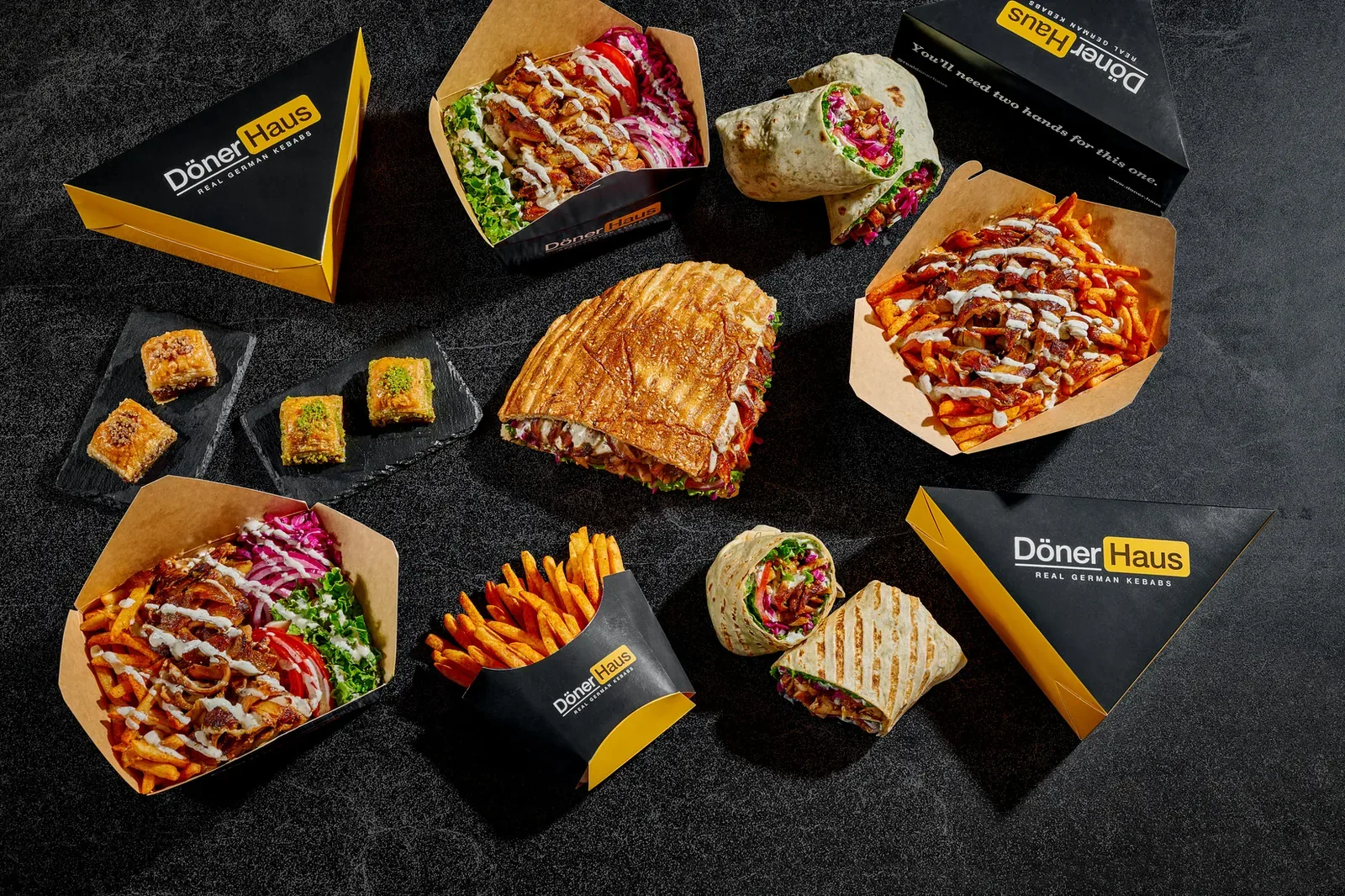
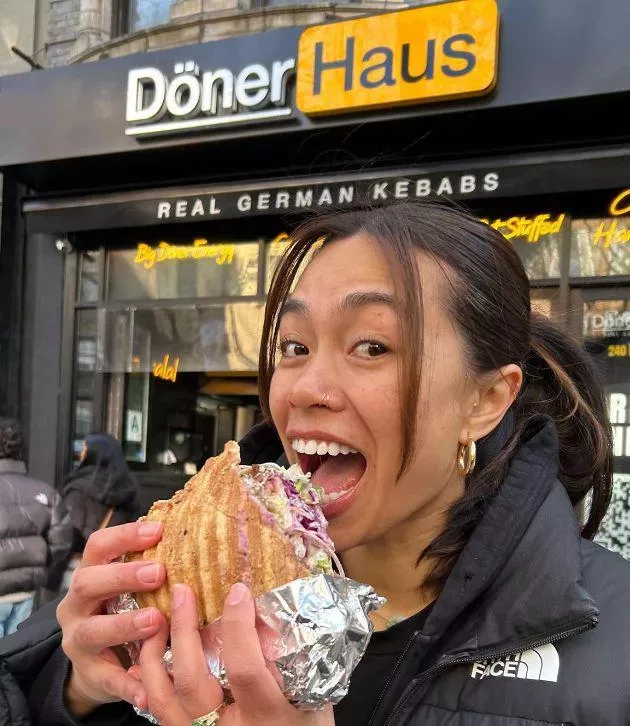
Where is German döner in the US? Döner Haus is a US franchise serving the Berlin sandwich: six shops open in three years (East Village, Astoria, Hell’s Kitchen, Bayside, Sunnyside, Central LA), seven or more in construction, 55 franchise commitments as of August 2026, none closed. GDK is also a US franchise; it lists New York, New Jersey and Texas — waffle bread, poultry in the beef — and has already closed Sugar Land, Bay Ridge, Westfield, Brighton Beach and Columbus Park. Kotti’s remaining New York sites are food halls; the Dean Street restaurant is closed; the drinks list includes beer and wine; and as of the latest owner reply the chicken is not certified halal. DonerG publishes Turkish döner in California. Doner Shack has a signed Prosper storefront and no open US door. See German döner in the US and US operators.
What is a dürüm? A rolled thin-bread döner, also called yufka or wrap on some boards. Same filling family, different carrier. Dürüm.
What do people drink with döner? Ayran, soda, water, and tea all appear. There is no required pairing. Drinks.
What allergens should I ask about? Wheat in bread, milk in yogurt sauces and cheese, sesame on loaves or in tahini, egg in some garlic sauces, and cross-contact from knives and fryers. Operator kitchens differ. Allergens.
How do I judge a shop? Watch the spit being carved, the bread, the vegetables, and whether staff can answer sauce and allergy questions. A queue measures demand, not quality. How to judge a shop.
Did döner begin in Istanbul? The vertical roast is an Ottoman restaurant method with nineteenth-century Istanbul evidence and competing Bursa and Kastamonu claims. Berlin later popularized the salad-and-sauce sandwich. Istanbul and Turkey.
Common questions
- What does döner mean?
- To turn. The meat rotates on a vertical spit. Döner kebab means rotating roasted meat.
- Is German döner Turkish?
- It comes from Turkish döner. The salad-and-sauce bread sandwich became a German-Turkish form associated with West Berlin in the early 1970s.
- Is the meat gluten-free?
- Not automatically. Some meat formulations contain wheat and others do not. Bread, sauce, utensils, and shared fryers add separate gluten and cross-contact questions.
- Is döner the same as a gyro or shawarma?
- No. They share a vertical-spit lineage but differ cumulatively in meat, seasoning, bread, sauces, accompaniments, and regional traditions.
- Is German döner the same as Turkish döner?
- Same root. The Berlin sandwich is one German-Turkish development of Turkish döner; other Turkish preparations continue alongside it.
- Is döner considered healthy?
- There is no category-wide answer. Serving weight, meat, bread, sauce, cheese, vegetables, and sides all change the nutritional profile.
- Why is the shop small?
- It does not have to be small. The portable sandwich suits an Imbiss counter, but Berlin also has seated restaurants and no square-footage rule defines the food.
- How do you order a German döner?
- Choose the item, meat, vegetables, sauce, and heat, then say whether it is to stay or go. “Mit allem” means the shop's standard toppings, which vary.
- Is there a vegetarian German döner?
- Traditional döner names meat, but shops document falafel, halloumi, roasted vegetables, and plant-based seitan spits. Check bread, sauce, cheese, and shared equipment.
- Do Germans eat döner late?
- Many do, especially in nightlife districts, but opening hours and rush periods vary by location. Late trading also involves staffing, safety, noise, transport, and food-safety controls.