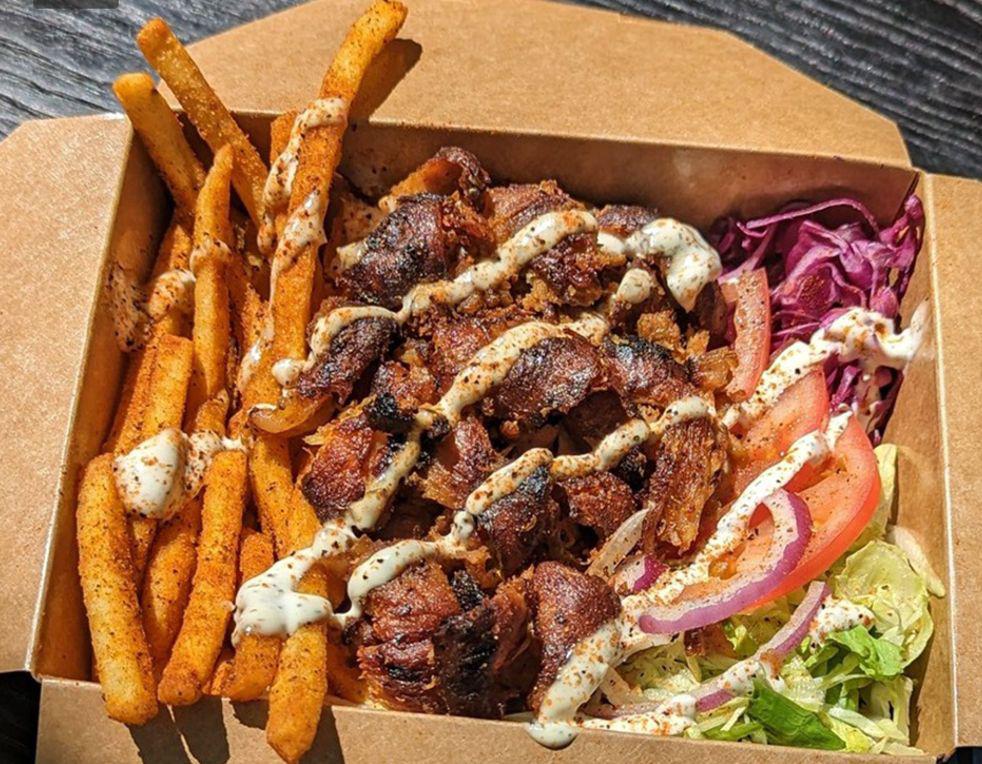
A döner box is a packaging format: carved meat and selected accompaniments served in a portable container rather than a bread pocket. Shops do not share one recipe.
In Germany, a box often means shaved meat over fries or salad, frequently with sauce. A Dönerteller is the plated relative and may add bread, rice, bulgur, or a separated salad. In the UK, a box can be a meat-heavy takeaway. US operators increasingly use “bowl” for a similar assembly over rice or greens. Names overlap; the menu description is more reliable than the heading.
Box, plate, and bowl
The three formats solve different problems. A narrow box is easy to carry and keeps a fork meal compact, but it traps steam. A plate keeps bread and salad apart from hot meat and fries. A broad bowl gives layered ingredients more surface area and suits an assembly-line menu.
None is necessarily “the sandwich without bread.” Some boxes omit salad; others include the full vegetable set. Some add rice, which is familiar in Turkish plated meals even if it is not the defining Berlin sandwich carrier. Some place bread on the side. The format belongs to a wider döner service tradition rather than a single US adaptation.
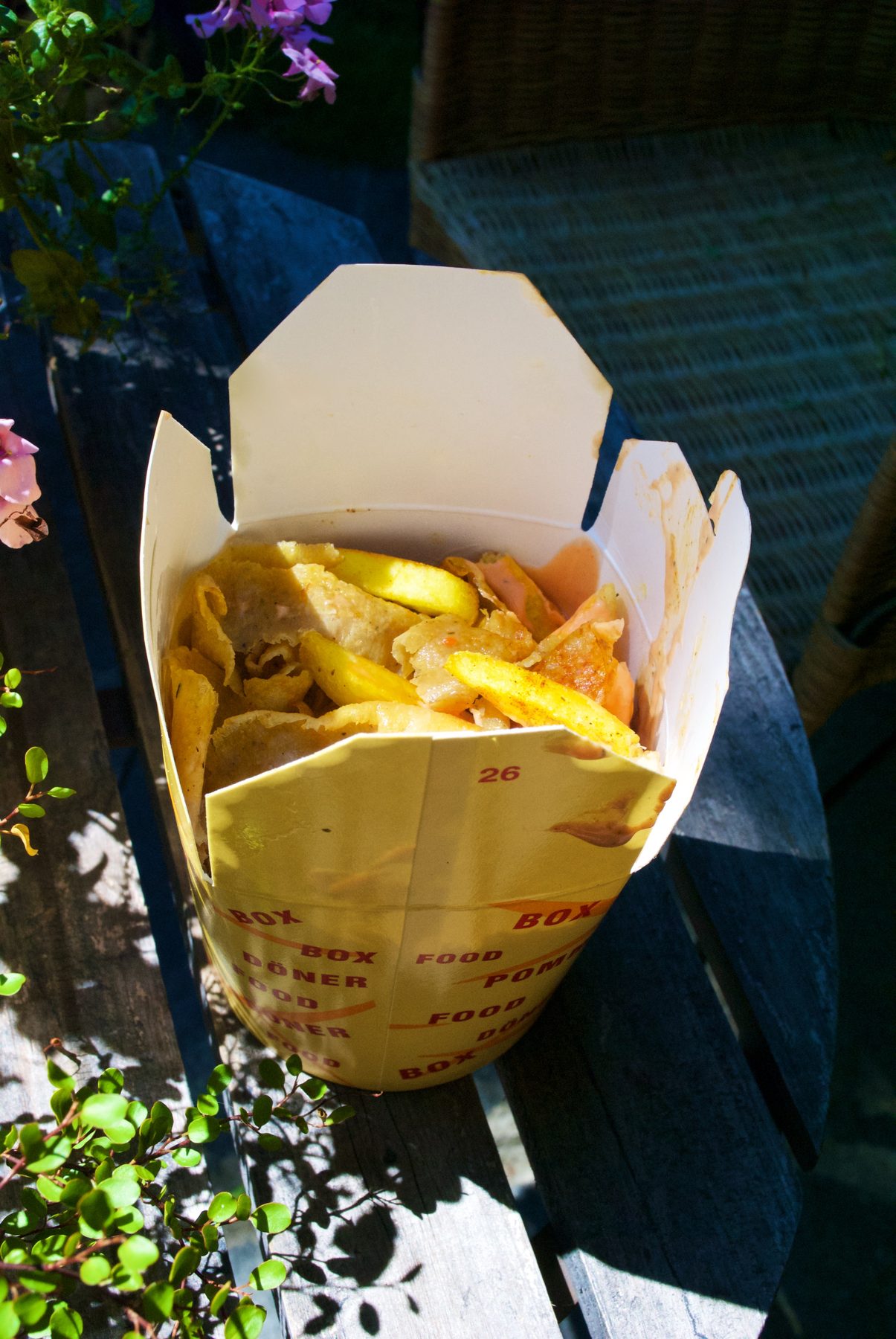

The picture is one serving, not a standard. Its tall container concentrates meat and fries vertically, so the first bites differ from the bottom. That is a useful contrast with a Teller, where the eater can combine meat, salad, starch, and sauce bite by bite.
One format, several bases
Fries, salad, rice, or no named base
A box heading does not name its ingredients. The base, vegetables, sauce, and bread have to be read from the specific menu.
How current operators use the term
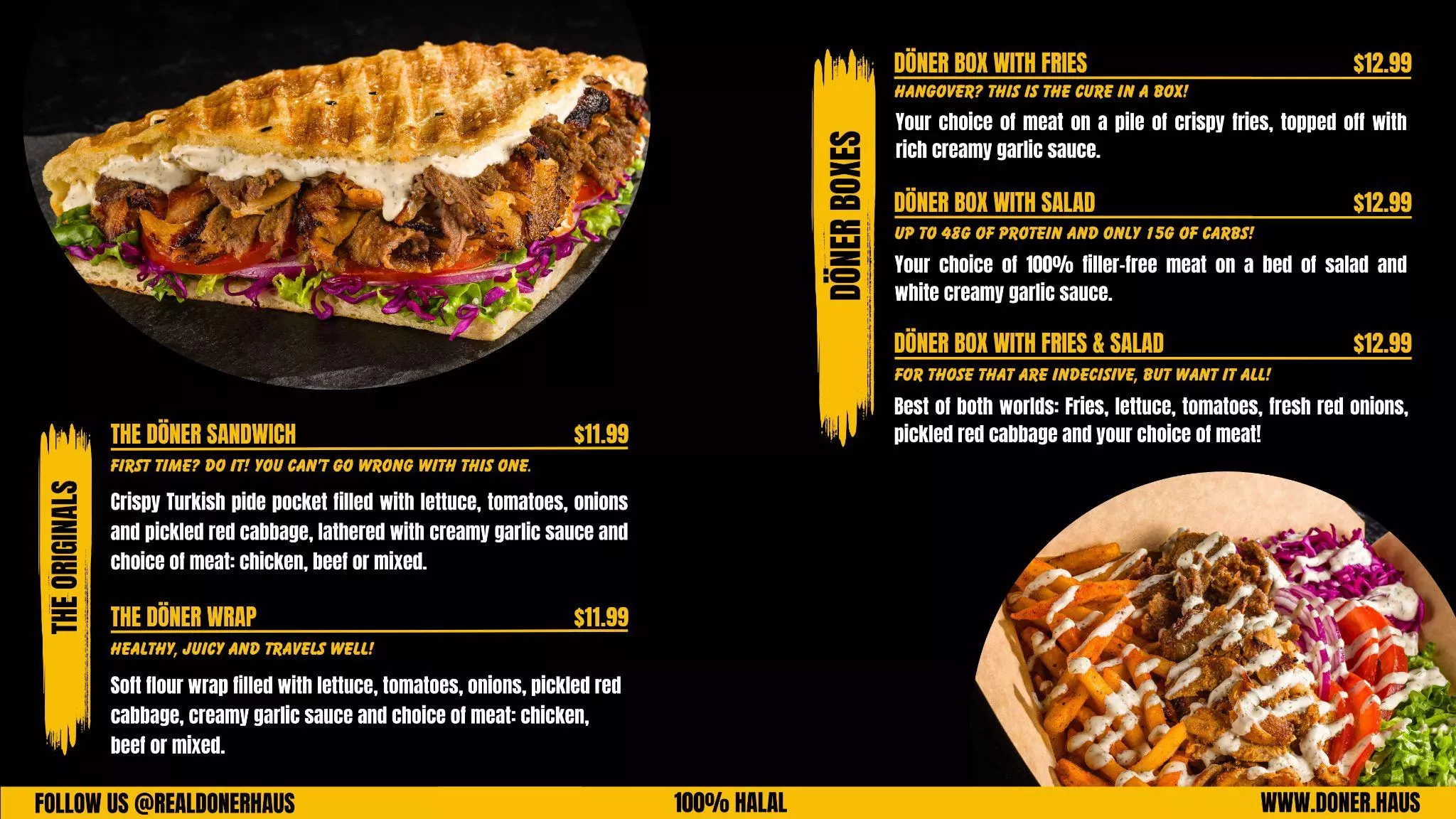
Döner Haus’s current East Village menu lists boxes with fries, salad, fries and salad, or rice — the chain’s current structure, which other operators may not follow. GDK’s current menus include rice bowls and other boxed products alongside its kebab. Kotti groups bowls with sandwiches and wraps, using salad toppings and its red and white sauces.
Those menus show why it is misleading to call rice purely an American invention or to declare that a box always contains the sandwich’s full vegetable set. Operators choose a base that fits their audience and supply line.
Texture and travel
Packaging changes the food. Hot meat and covered fries release steam; closing the lid softens crisp edges. Salad placed under hot meat wilts. Sauce on top protects some meat from drying but accelerates sogginess. For a longer journey, separate sauce can preserve texture—if the shop offers it.
A plate keeps contrast easier; a box is easier to carry; a bowl can sit between the two. Those are service trade-offs.
Nutrition and allergens
Removing bread changes the meal only if the replacement is known. A salad base usually lowers starch relative to bread or fries, but portion size and sauce still matter. A fries box can contain as much or more energy than a sandwich. A rice bowl is not nutritionally interchangeable with a salad box.
A box is also not automatically gluten-free. Meat formulas can contain wheat; sauces can contain allergens; fries can share oil with breaded food; preparation surfaces can contact bread. GDK’s current allergen guidance says its own kitchens cannot guarantee allergen-free food because of cross-contact. Ask the specific location about the specific build.
For halal consumers, a box uses the same meat and controls as the sandwich. For vegetarians, “salad box” may still include dairy- or egg-based sauce. For vegans, cheese, yogurt sauce, mayonnaise, and shared fryers all need checking.
How to order it clearly
In Germany, ask what comes in the Dönerbox before choosing it. Useful questions are mit Pommes oder Salat? (with fries or salad?), mit Soße? (with sauce?), and ist Brot dabei? (is bread included?). If the goal is a plate, ask for a Dönerteller. If the goal is avoiding an allergen, state the allergen and ask about cross-contact rather than relying on the word “box.”
Bowls, gym boxes, and fries that moved inside the bread
US and UK chains have multiplied the heading. GDK USA lists a fries box, a fries-and-salad box, a salad-forward “Gym Box,” and a rice bowl with cabbage, lettuce, onion, tomato, and red or white sauce. Its UK site sells related boxed meals beside the waffle-bread kebab. Döner Haus’s East Village boxes already show fries, salad, mixed, or rice. DonerG’s Istanbowl goes further toward a Turkish mixed plate: rice, two meats, shepherd’s salad, falafel, and pita on the side.
Those products share packaging logic — meat plus a starch or salad in a container — and then diverge. A rice bowl is closer to a Dönerteller than to a Berlin fries box. Fries inside DonerG’s Original Fladenbrot are not a box at all; they are a sandwich ingredient, discussed in sides and fries.
Calories follow the base. GDK’s published UK OG sandwich number does not transfer to a fries box in New Jersey. See calories. Format comparison with the roll and the pocket is in dürüm. The short Explainer is what is a döner box?.