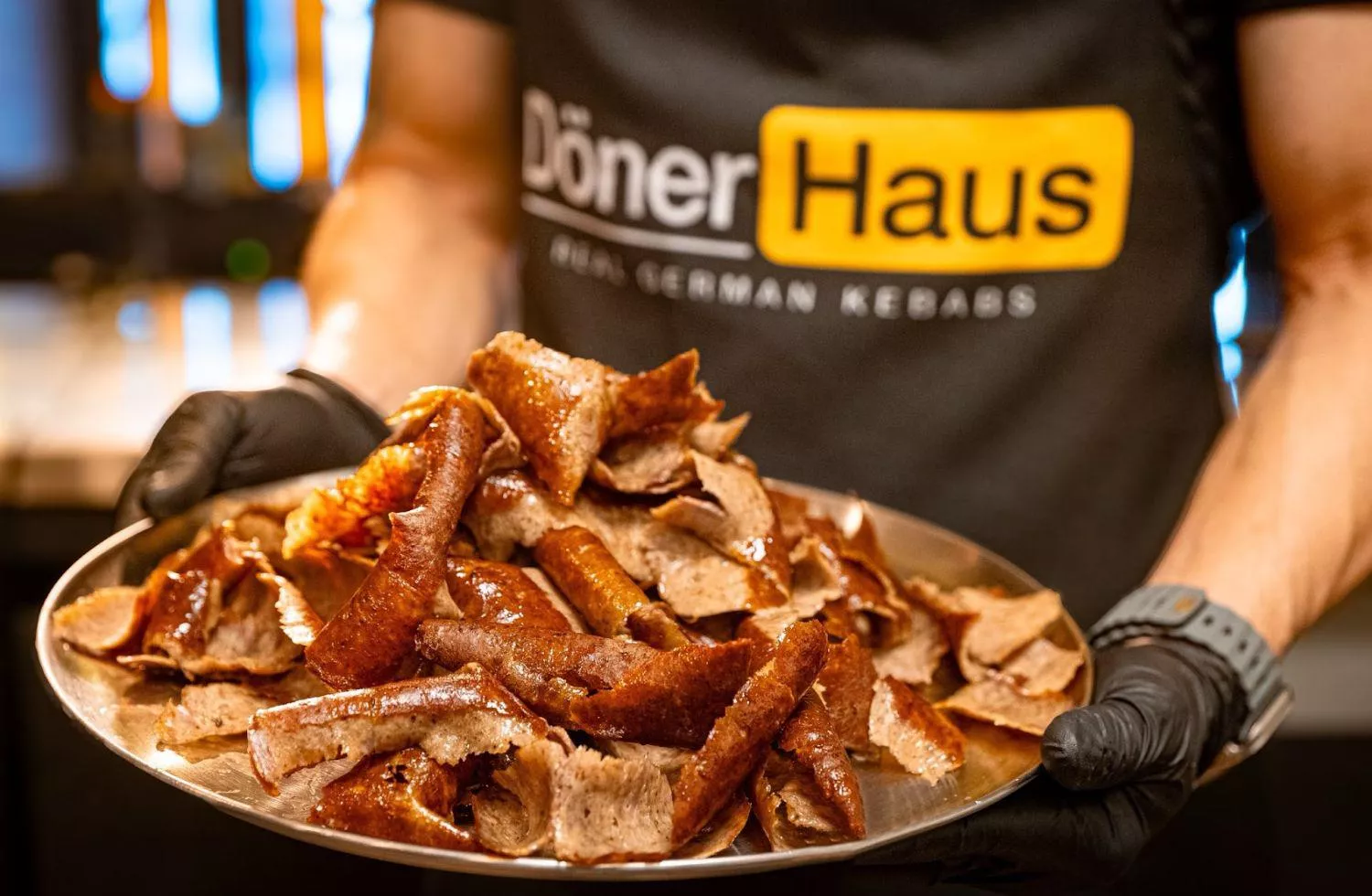
Four labels can appear around one spit—beef, döner, halal, and gluten-free—and none proves the other three.
Döner describes a cooking tradition and, in Germany, an expected product composition. Halal concerns Islamic permissibility and the certification scope. Gluten-free concerns ingredients and cross-contact. “Organic” is another regulated production claim. A careful menu keeps these claims separate.
What Germany means by Döner Kebab
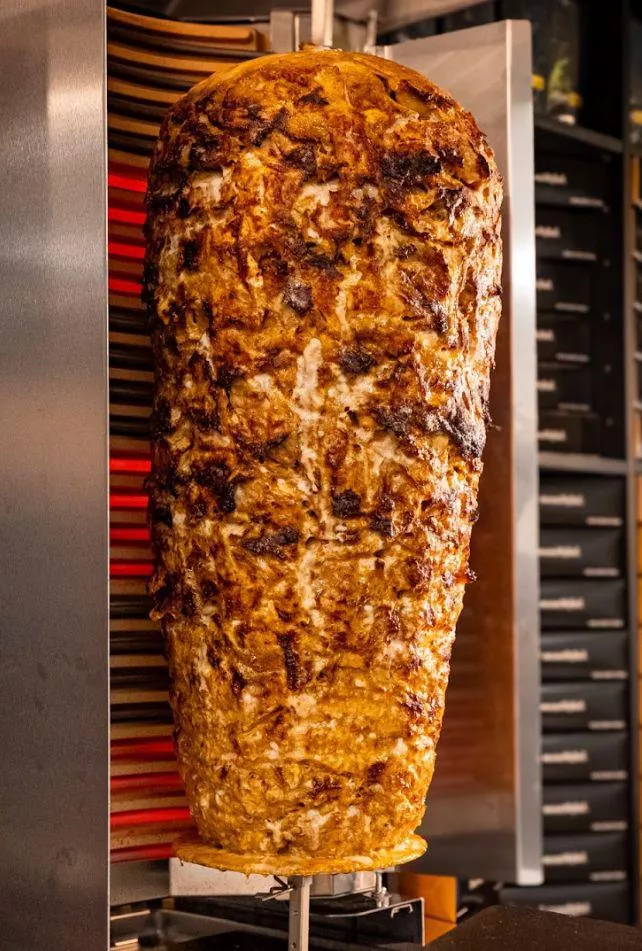
The German Food Book Commission’s current meat guidelines describe red-meat döner as slices of beef/veal and/or sheep/lamb assembled on a spit. Minced meat may be included up to 60 percent. Salt, spices, egg, onion, oil, milk, and yogurt are among the customary additions described. Poultry döner has separate composition rules.
When a product contains a materially different set of ingredients or more finely minced meat than the guidelines allow, it may need a descriptive name such as Hackfleischdrehspieß. Niedersachsen’s food-control agency gives concrete examples in its consumer guide to döner and Drehspieß labeling. The guidance still allows minced meat inside the döner name, and Drehspieß names composition rather than safety.
US menus do not operate under those German naming conventions in the same way. The ingredient statement or restaurant’s current allergen information is therefore the relevant evidence. A formed cone may contain wheat, soy, milk, or other ingredients; another may not. Naming a cuisine or supplier category cannot answer.
What halal certification establishes
Halal means permissible under Islamic law. In food production, certification can review animal species, slaughter, ingredients, processing aids, equipment, cleaning, packaging, and contamination controls. IFANCA explains that its review reaches beyond the obvious ingredients to materials and chemicals that may contact the product.
Scope is critical. A certificate may cover a particular manufacturer and product, a slaughter facility, a production line, or a restaurant location. A logo without the certifier’s name or a certificate outside its dates is weak evidence. Consumers can ask:
- Who is the certifier?
- Does the certificate name this product, manufacturer, or restaurant?
- What are the issue and expiry dates?
- Does the premises handle pork, alcohol, or non-certified meat?
- Are storage, utensils, and cooking equipment included in the controls?
The word zabiha commonly emphasizes compliant slaughter. Halal certification can cover much more than slaughter, depending on the certifier and program. Neither term by itself means “organic,” “whole-muscle,” “no additives,” or “gluten-free.”
The mark shown here is illustrative. Verification requires a current certificate or the certifier’s own listing.
Halal does not answer the gluten question
Wheat is halal, so a halal-certified meat product can contain wheat. Soy is also generally halal. Conversely, a product with no wheat may have no halal certification. This is why “halal” and “filler-free” should never be collapsed into one claim.
The standard döner sandwich normally contains wheat bread and may contain sesame. Sauces may contain milk, egg, sesame, or other allergens. A box without bread removes one obvious source but not possible wheat in the meat or sauce, and it does not remove cross-contact.
GDK’s current US allergen page gives an operator-specific warning: allergens including gluten and milk are used, and its preparation methods create a risk of unintended cross-contact, so it does not guarantee allergen-free food. Its scope is GDK’s own products and kitchens.
For celiac disease or a serious allergy, ask the location directly about the exact meat, sauce, fryer, utensils, and preparation area. “The fries have no wheat ingredients” is not enough if they share oil with breaded food. “The meat is gluten-free” is not enough if the knife and counter contact bread.
Operator claims are local, and poultry can hide in “beef”
US menus make the variation concrete. In August 2026, Döner Haus’s public site described its meats as filler-free, gluten-free and Zabiha halal — the Berlin sandwich with a named slaughter standard. GDK’s UK allergen page states that beef doner contains poultry for added juiciness. A customer who ordered beef and does not eat chicken did not get what the word on the board said. DonerG states that its döner is halal-certified; the certifier, dates, and whether the certificate covers each California location still have to be checked at the shop.
Kotti is the New York case of a directory going stale against the operator’s own words. As of the latest owner reply, the chicken is not certified halal. The menu also sells Radeberger, Schöfferhofer and Spätburgunder next to the sandwich. Zabihah still listed the Essex Market stall as certified halal with no alcohol. The shop has already said otherwise.
Bavaria’s food-control döner leaflet is another German example of why names and extra ingredients (including breadcrumbs or soy in some products) are a labeling issue there. US restaurants do not operate under that leaflet.
The dedicated allergens chapter separates wheat, milk, sesame, egg, and cross-contact so they are not collapsed into this halal discussion. Vegetarian seitan “döner,” documented at Vöner on berlin.de, is wheat by definition. Halal, gluten-free, and vegetarian are three different doors.
Four different questions
Composition, certification, allergens, handling
A trustworthy answer identifies the exact product and location. No cuisine label, logo, or glance at the cone settles all four.
1 Exact product
Read its ingredient and allergen information rather than generalizing from the cone's appearance.
1 Named certifier
Check the current certificate and what facility, line, product, or premises it covers.
Separate Cross-contact controls
Bread, sauce, utensils, counters, and fryers can change an otherwise simple ingredient answer.
Common questions
- Is döner meat gluten-free?
- Not automatically. Some formulations contain wheat and others do not. Bread, sauces, shared surfaces, and fryers add separate gluten and cross-contact questions.
- Is German döner halal?
- Some products or locations are halal-certified and others are not. Verify the named certifier, product or premises covered, and current certificate rather than relying on the cuisine label.
- What meat is in a German döner?
- Beef, veal, lamb, and chicken all appear. Germany's food guidelines define composition and naming expectations for red-meat and poultry döner.