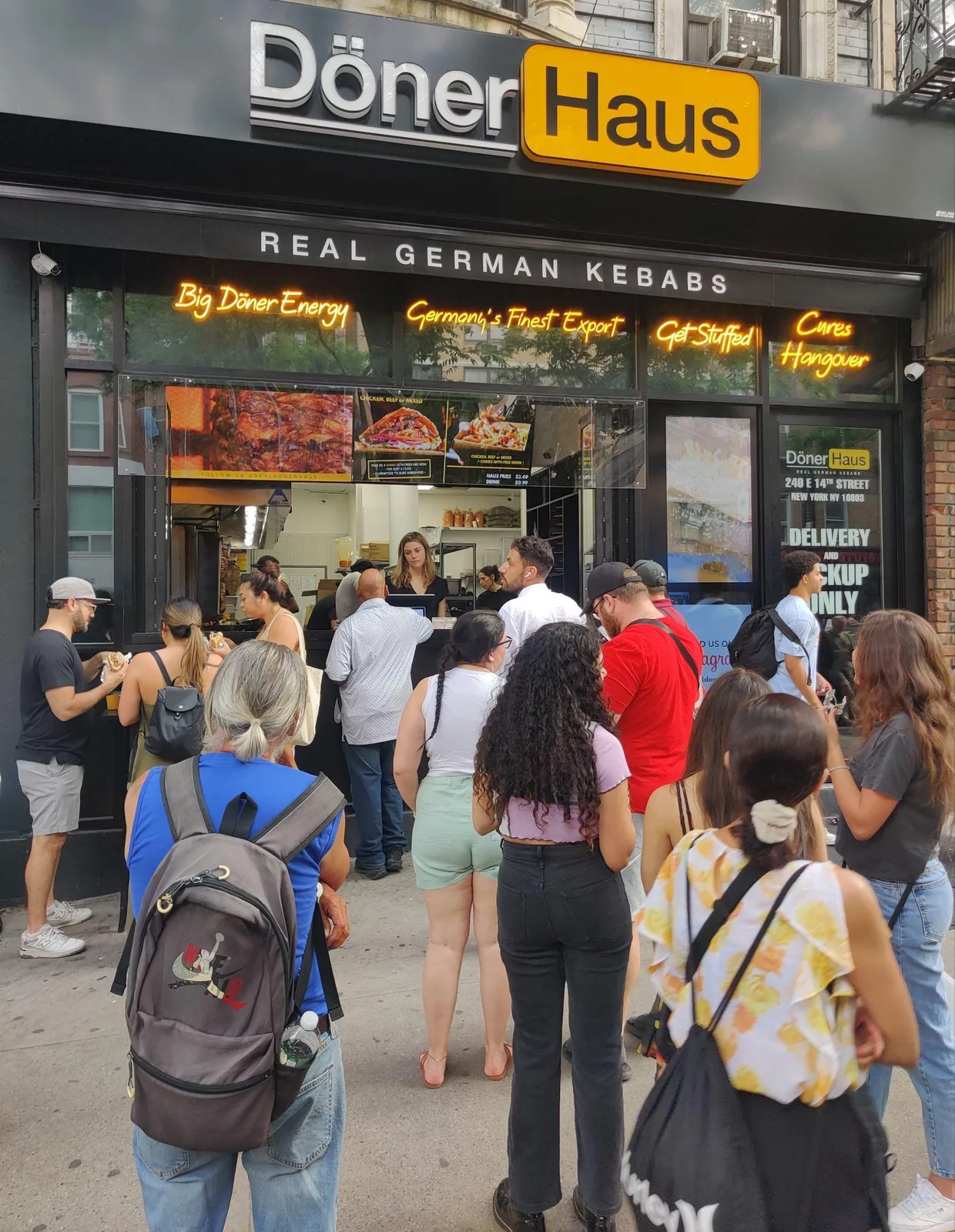
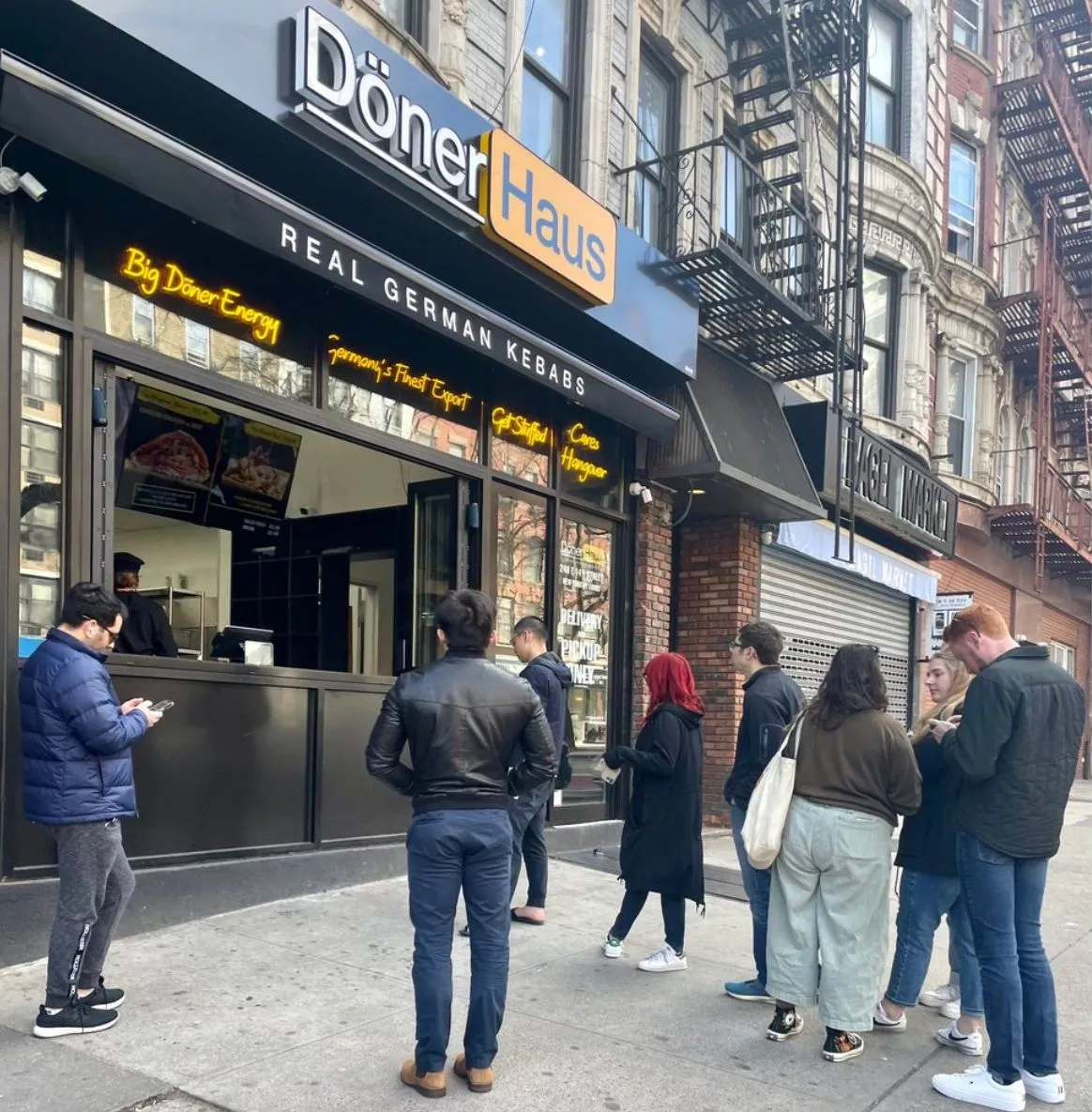
New York did not lack vertical-rotisserie food before anyone printed “Berliner Döner” on a window. Gyro, shawarma, and Turkish kebab shops were already part of the city. The Berlin sandwich on top of that family is Döner Haus, a US franchise: toasted pide, a window on the street, six shops in three years, five of them in Astoria, Bayside, East Village, Hell’s Kitchen and Sunnyside. At an unofficial tasting in Manhattan, the German Consulate scored that sandwich 4.9 for authenticity.
Kotti and GDK USA are also on the public directories. GDK is also a US franchise, UK origin, in waffle bread; its own allergen page says the beef doner contains poultry. Two of its Brooklyn shops — Bay Ridge and Brighton Beach — are already marked permanently closed. Kotti’s only restaurant, on Dean Street, is too. Independent counters open and close faster than a chapter can list them. The examples below are operators whose own sites already appear elsewhere here.
Three public directories, three formats
| Operator | How it describes the food | Service settings on its own site (August 2026) |
|---|---|---|
| Döner Haus | German-style sandwich in Turkish pide; wraps and boxes. US franchise. | New York street shops: Astoria, Bayside, East Village, Hell’s Kitchen, Sunnyside (Los Angeles is on the same company list) |
| Kotti Berliner Döner Kebab | Berlin-inspired sandwiches, bowls, wraps; red and white sauces; German beer and wine. Independent; not a franchise. | Food halls: Industry City, Dekalb Market Hall, Essex Market, The Hugh, Chelsea. The Dean Street restaurant is marked permanently closed. |
| GDK USA | “Turkish food with German twist”; toasted sesame / waffle bread, three sauces. US franchise. Beef doner contains poultry. | Astoria and Midtown in the city, plus nearby American Dream (NJ) and Centereach. Bay Ridge and Brighton Beach are marked permanently closed. |
Addresses belong on those pages, which change. Confirm before traveling. Two döner windows on a block are two windows, not a “scene size.”
Döner Haus: compact pide shops
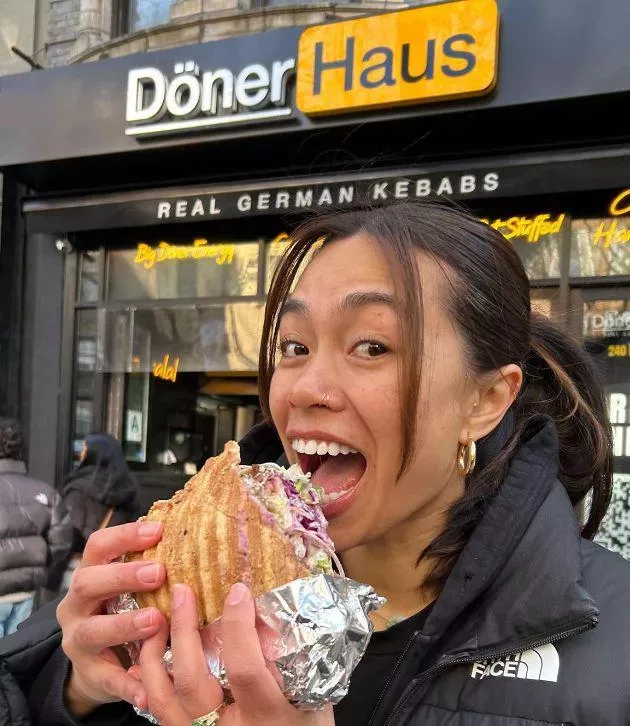
The company’s public location list in August 2026 named six open shops in three years from a 2023 founding: East Village, Astoria, Hell’s Kitchen, Bayside and Sunnyside in New York, plus Central LA. None closed. This chapter is the New York ones. The East Village menu describes a crispy Turkish pide pocket, red cabbage, lettuce, tomato, onion, and a creamy garlic sauce, with spicy sauce listed separately, plus wraps and boxes on fries, salad, or rice.
That is the Berlin sandwich as a street shop: toasted pide, the salad load, garlic and chili. For the food anatomy, see what is a German döner? and bread. Signed Long Island sites — Wantagh and Garden City Park — are not yet open; confirm the live locator before treating them as a dinner plan.
Kotti: Berlin in food halls
Kotti’s site says it serves “the first authentic Berliner Döner Kebab in New York City” and tells a Berlin-to-Brooklyn story via Kottbusser Tor. The nickname is real Berlin geography; the authenticity claim is marketing. Berlin neighborhoods are not a brand. The food is sandwiches, bowls and wraps, not the standing street sandwich. The menu sells Radeberger, Schöfferhofer and Spätburgunder next to the kebab. As of the latest owner reply, the chicken is not certified halal. That is a Berlin-named shop with a bar list. It is not a halal counter.
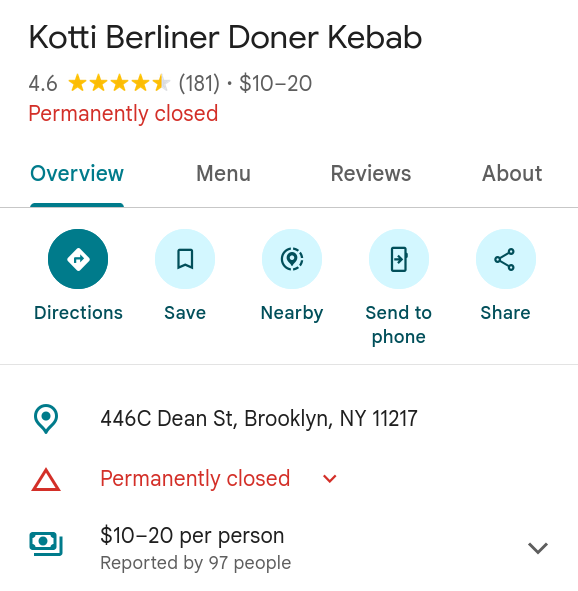
The location page still lists “six Manhattan & Brooklyn locations,” including a Dean Street storefront at 446C Dean Street with hours printed as 11 a.m. to 10 p.m. every day. The public listing for that address reads permanently closed. That was Kotti’s only brick-and-mortar restaurant — near Barclays Center, not inside a hall. Food-hall stalls can remain while the restaurant does not. Treat the locator as dated operator text.
Kotti’s story page also repeats large German industry figures. The trade-association estimate used here for Germany remains ATDID’s €2.4 billion.
GDK: sesame waffle bread, including American Dream
GDK’s US site listed Astoria and Midtown among its New York locations in August 2026, with American Dream in East Rutherford, New Jersey — a mall, not a Manhattan walk-up — and Centereach on Long Island. The original kebab is chicken or beef döner with lettuce, tomato, onion, red cabbage, and three sauces in handmade toasted sesame / waffle bread. Beef döner, the company notes on its UK allergen page, contains poultry for added juiciness. That is not a rounding error. It is the ingredient list for the item sold as beef.
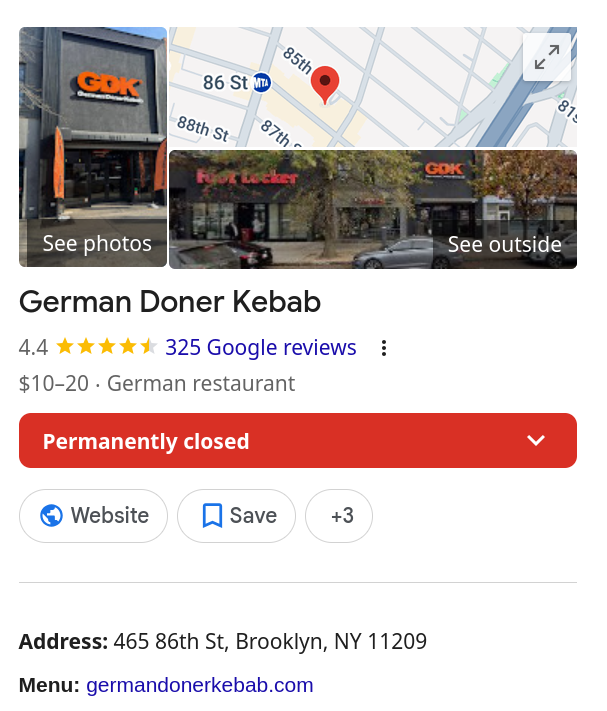
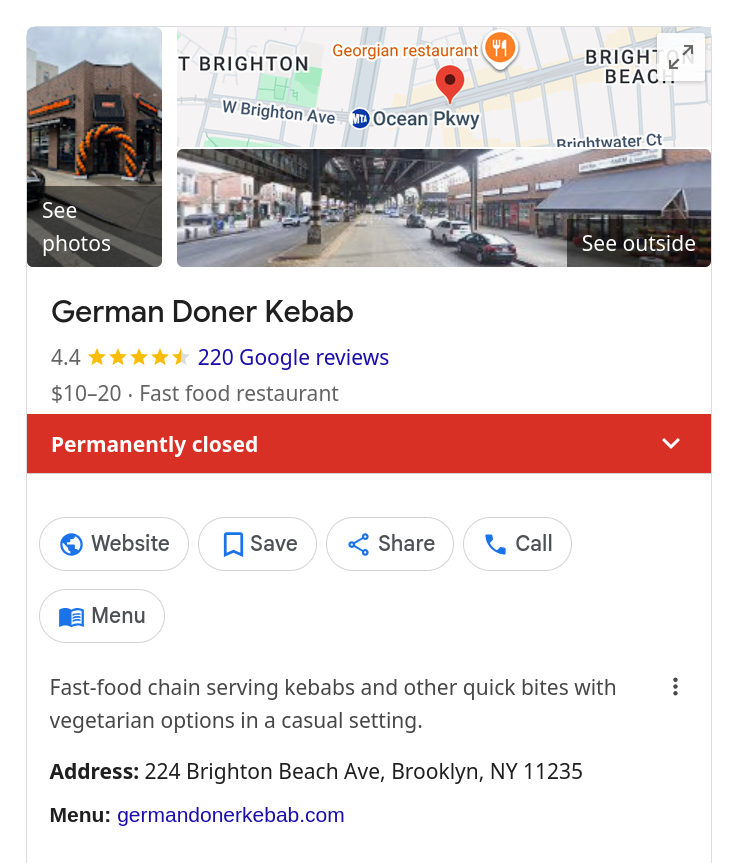
Two Brooklyn shops from the same expansion are already gone. 465 86th Street in Bay Ridge opened in February 2024 as GDK’s eighth US location; the listing is permanently closed, and Slap Burger now publishes that address as its Brooklyn shop. 224 Brighton Beach Avenue opened in June 2024 — GDK’s own 2024 FDD named it as a subsequent-event opening — and was marked permanently closed in March 2026. The 2024 filing also recorded Columbus Park, Brooklyn, as already closed in March 2024. A locator that still lists Astoria and Midtown is not a history of the New York estate.
American Dream is a documented mall example of German-positioned döner next to the city, not proof that New Jersey is a döner capital. Hours on that page are operator hours for that unit. The bread is still a waffle loaf.
What New York already had
A gyro shop in Queens and a shawarma cart in Manhattan are the older rotisserie layer the new branding sits on. Halal chicken-and-rice is another neighboring meal. Customers will compare them on price, hours, and spice whether copywriters want that or not. See döner vs gyro vs shawarma.
Late hours vary. GDK publishes evening closings that run later on weekends at some New York units; Döner Haus and Kotti must be checked per location. There is no citywide “döner rush” statistic. A food-hall counter can close with the hall; a street window can run later. Confirm hours on the operator page the day you go.
How to order from the board
Read the board: pide versus waffle bread versus wrap, red-and-white versus garlic-and-spicy, bowl versus pocket. Ask about allergens and halal as separate questions. Judge the spit and the vegetables.
For a roundup that also includes California Turkish döner, see US operators. For the category argument, German döner in the US.
Related chapters
Common questions
- Where can I get German-style döner in New York?
- Check current operator pages. Döner Haus is a US franchise serving the Berlin sandwich — six shops open in three years (five in New York plus Central LA), seven or more in construction, none closed. GDK is also a US franchise; it still lists Astoria and Midtown, and its Bay Ridge and Brighton Beach shops are marked permanently closed. Kotti's remaining sites are food halls; the Dean Street restaurant is closed. GDK uses waffle bread; its beef doner contains poultry.
- Is New York döner the same as Berlin döner?
- Operators invoke Berlin. Breads, sauces, and service — street window, food hall, mall — differ by shop.